
Valuable referrals come from trust, timing, and fit, not a bigger contact list. The best strategies for facilitating valuable business referrals make it easy for satisfied customers and relevant business partners to connect people who genuinely need your services. A referral program gives those introductions a clear, consistent process, with defined steps for sharing and acknowledging referrals.
A warm introduction can open a better conversation than a cold pitch. The challenge is building a repeatable system without making relationships feel transactional or letting reward costs outweigh the value of new business.
This guide explains how to structure a referral program, weigh incentives against their costs, and make requests after customers have seen meaningful value. You’ll also learn how to build a referral network with complementary businesses, communicate mutual benefits, and make introductions straightforward. Put quality connections first, then use a process to support them.
Key Takeaways
- Set referral rewards that recognize valuable introductions while keeping the program’s costs and customer perceptions in view.
- Choose a program structure that fits your business, from tiered incentives to charitable or game-based rewards.
- Make referral requests when customers can speak to real results, and keep the introduction process clear and easy.
- Build a focused network with complementary businesses through mutual value, consistent communication, and genuine relationship-building.
1. Balancing referral rewards against costs and customer perceptions
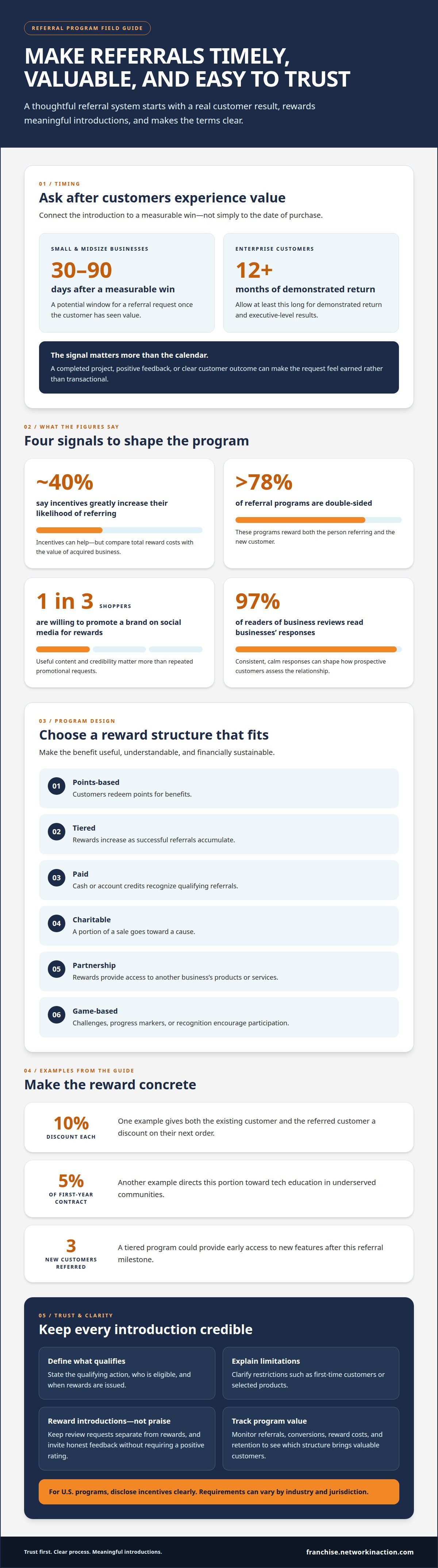
Ask after customers experience value, not immediately after a purchase. Small and midsize business customers may be ready 30 to 90 days after a measurable win. Enterprise customers may need at least 12 months of demonstrated return and executive-level results. A well-timed request connects the introduction to a positive experience, making the referral feel earned rather than transactional.
Keep rewards proportionate to the value of a successful referral. Nearly 40% of customers say incentives greatly increase their likelihood of referring, but that doesn’t make every reward profitable. A gift card, service credit, or useful gift can thank the referrer. Consider whether a benefit for the referred customer also makes sense, then compare total reward costs with the value of acquired business.
Common referral-marketing mistakes include asking before trust is established, offering rewards that erode profitability, and making incentives feel like payment for praise. Customers may hesitate if a referred friend could view the recommendation as biased. State the terms clearly, reward genuine introductions, and don’t pressure customers to recommend a service they haven’t found valuable.
Use social media to make sharing easy and keep conversations relevant. For example, post a practical tip that helps your audience solve a real problem, then invite satisfied customers to share it with someone who may benefit. One in three shoppers are willing to promote a brand on social media in exchange for rewards. Focus on useful content and credibility, not repeated promotional requests or advertising-style messages.
There’s no universal number of times to ask. Build a simple cadence around clear customer milestones: request an introduction after a positive outcome, then wait for another meaningful success before asking again. Set expectations early by explaining that referrals help your business grow, and make each request specific. A tailored prompt, such as asking whether the customer knows one or two people who could benefit, is easier to answer than a generic appeal. Track requests and outcomes to keep the program considerate, measurable, and focused on loyalty.
2. What’s a referral program?
A referral program gives clients a clear process for recommending a business and earning recognition or rewards. Start by defining the goal: more qualified introductions, stronger retention, or increased word-of-mouth marketing. Then identify the qualifying action, such as a referred person becoming a customer. More than 78% of referral programs are double-sided, rewarding both the referrer and new customer.
Match the reward structure to your audience and business model. Points-based programs let customers redeem points for benefits. Tiered programs increase rewards as referrals succeed. Paid programs provide cash or account credits, while charitable programs direct a portion of a sale toward a cause. Partnership rewards offer access to another business’s products or services. Game-based programs use challenges, progress markers, or recognition to encourage participation.
Make the incentive useful, understandable, and financially sustainable. For example, one program gives both the existing customer and referred customer a 10% discount on their next order. Another directs 5% of a new customer’s first-year contract toward tech education in underserved communities. A tiered structure could offer early access to new features after a customer refers three new customers.
To set clear rules, state what counts as a successful referral, who qualifies, and when each reward is issued. Explain limitations, such as restricting eligibility to first-time customers or selected products. In the United States, disclose incentives clearly and keep review requests separate from rewards for positive feedback. Requirements can vary by industry and jurisdiction, so account for applicable rules when designing the program.
Reward referrals for meaningful actions, not favorable opinions. A gift, credit, or service can recognize a qualifying introduction, while review requests should invite honest feedback without requiring a positive rating. Track referrals, conversions, reward costs, and retention to see which structure brings in valuable customers.
3. Timing referral requests around results and positive feedback
Use a clear customer signal, not just a calendar reminder. When a customer sends a positive email about a completed project, respond to the feedback, recognize the result, then invite an honest review or relevant introduction. This links the request to a real experience and gives the customer room to decline without pressure.
A valuable, qualified referral connects someone with a genuine need to a business equipped to address it. Before asking customers to refer, describe the kind of client who benefits most and the outcome your business helps deliver. A specific description makes recommendations easier and reduces introductions that waste either party’s time.
Ask without making the relationship transactional. Acknowledge the customer’s result, then say that introductions to people facing a similar challenge are welcome. Recognition can be personal thanks or a business-growth perk, such as an invitation to share expertise with a relevant community. Keep any incentive separate from review sentiment, and never offer a reward in exchange for a positive rating.
Feedback also shapes reputation after a difficult experience. Respond to negative reviews calmly, address the concern directly, and explain the practical next step without sharing private details. Maintain business listings and reply to reviews consistently. 97% of readers of business reviews read the businesses’ responses, so each reply can influence how prospective customers assess the relationship.
To track sources and outcomes, record the referring person, referred lead, date, status, conversion, and resulting revenue in one system. Review these details regularly to see which relationships generate qualified opportunities, not just names. After an introduction, thank the referrer, contact the lead with context, and agree on a useful next step. Share relevant information, answer questions, and keep the referrer informed when appropriate. This feedback loop helps strengthen professional networks and improve future recommendations.
4. Building referral networks with relevant businesses
A strong referral network starts with relevance, not reach. Identify businesses that serve the same customer base without selling the same solution. For example, a commercial interior designer and an office furniture consultant may both meet clients planning workplace changes. Effective strategies for facilitating valuable business referrals start by spotting these natural overlaps, then building relationships around customer needs.
Make each introduction useful to the person receiving it. Agree with partners on ideal customers, services, and signs of a good fit. Clarify what happens after an introduction, including who contacts the prospect and how. Clear expectations protect trust. A mismatched referral can frustrate a prospect and weaken the partners’ relationship.
Give referrals with context, not just a name. With permission, explain why the introduction could help, then connect both parties by email or in a shared conversation. For instance, tell a partner that a client needs help with a workplace redesign and why their expertise may fit. This gives the recipient a relevant starting point without promising a particular outcome.
Keep partner relationships active between introductions. Share useful updates, recognize helpful connections, and schedule check-ins to exchange feedback. A referral link in an email signature can simplify sharing, while personal context helps partners know when to use it. Networking events and online communities can introduce you to complementary businesses, but prioritize credible connections over collecting contacts. These strategies for facilitating valuable business referrals depend on relevance and mutual trust.
Referral marketing works best as a two-way practice, not a quota. Ask partners what makes an introduction valuable, send suitable opportunities in return, and thank them for helping a customer. Shared standards and open communication make it easier to identify poor-fit leads before passing them along. Review which introductions lead to strong customer experiences, then invest in those relationships. The result is a focused network that can create meaningful connections for both businesses.
Network In Action: Franchise a business opportunity
Network In Action offers a franchise opportunity for professionals who want to lead local business referral groups. Its model emphasizes curated, high-quality membership and relationship-driven growth without forced referrals, creating a more intentional alternative to traditional networking.
Franchisees receive comprehensive training and ongoing support to build and manage groups. Monthly networking meetings and a technology platform, including an app and CRM, help members stay connected. This model may suit you if you want to lead a professional community with a modern, structured approach.
If community leadership and a flexible business path align with your goals, explore the Network In Action franchise opportunity.
Turn relationship-building into your next opportunity
The best strategies for facilitating valuable business referrals grow from consistent leadership, not one-off requests. If building a professional community around meaningful connections fits your ambitions, consider how this kind of work could align with your next business move.
Network In Action offers a franchise business opportunity for people interested in leading local referral groups. Consider how it fits your strengths, goals, and preferred way of working. A thoughtful decision starts with a conversation about the opportunity and the role community leadership could play in your future.
Contact Network In Action to connect and explore whether this path fits your plans. Your next step can be purposeful, practical, and built around relationships that matter.
Frequently Asked Questions
What’s a referral program?
A referral program is a structured way to encourage and record introductions from customers or partners. For example, a consultant could give clients a simple referral form to capture a prospect’s needs and preferred contact method. This helps the business follow up consistently, distinguish personal recommendations from other leads, and see whether referrals become customers.
How can I encourage referrals without offering cash incentives?
Make referring easy and recognize the effort without attaching a cash reward. You might thank a customer personally, highlight a partner’s expertise in a relevant newsletter, or invite a trusted advocate to share insights at a professional event. These gestures work best when they’re genuine, optional, and connected to the person’s interests. Keep the focus on helping someone make a useful connection.
How do you figure out the right amount for referral incentives?
Set an incentive by working backward from the economics of acquiring a customer. Consider gross margin, fulfilment costs, the likelihood of repeat business, and the time needed to administer rewards. Then define a maximum reward that still leaves the referral profitable. Test the amount with a limited campaign and review conversions and net value before expanding the program.
What is referral marketing?
Referral marketing encourages existing customers, professional contacts, or partners to introduce potential customers. Unlike a broad advertising campaign, it uses trusted relationships to create a direct connection. For example, a software consultant might ask a satisfied client to introduce another business facing the same operational challenge, then tailor the conversation to that prospect’s needs.
How can businesses identify and build relationships with strong referral partners?
Look for partners who serve a similar audience, uphold compatible standards, and offer complementary services. A financial planner and an estate attorney, for example, may encounter clients with overlapping needs without competing for the same work. Start by discussing ideal referrals and boundaries, then make a relevant introduction. Follow up to learn whether the connection was useful to both parties.
What referral incentives are common, and how much do they cost?
Common incentives include account credits, gift cards, products, services, charitable contributions, and early access to offerings. There’s no single cost that suits every business: choose a reward based on customer value, profit margin, redemption likelihood, and administrative effort. Set clear eligibility rules, calculate the full cost per successful referral, and adjust the reward if it undermines profitability.