
Leaving a high-stress job for business ownership works best as a planned transition, not an impulsive escape. To transition from a high-stress job to business ownership, identify the pressures you’re leaving, understand the demands you’ll face, and build a plan around your finances, work boundaries, and business goals. A clear plan turns a big leap into manageable decisions.
You may be ready for more control over your time and direction, but business ownership brings its own stressors: financial uncertainty, constant responsibility, and the temptation to let work take over. Prepare for those realities, set sustainable work hours, and make time off part of your operating plan. A thoughtful transition plan helps you base your next move on practical priorities, not only the need to leave a demanding job.
Key Takeaways
- Prepare for financial uncertainty and the pressure of carrying every decision; build routines that help you manage stress before it becomes burnout.
- Set clear work hours, protect time off, and adjust responsibilities or processes that routinely push beyond those boundaries.
- Recognize when stress is affecting your mental health, and use realistic goals, trusted support, and professional help when needed.
- Map your transition around a financial runway, business skills, and a documented plan for the next stage of ownership.
1. What Are the Top Stressors in Business Ownership?
For entrepreneurs, financial uncertainty can weigh as heavily as workload. One survey found 44% of business owners feel financial stress and fear about their business’s future. Identify your biggest pressure points, such as uneven cash flow, customer demands, or making every major decision yourself. Then build a response for each, instead of treating stress as one problem.
Burnout deserves attention early. One in three entrepreneurs struggle with depression and burnout. Protect basic routines: prioritize adequate sleep, which is linked with lower stress, better mood, and clearer thinking. Add movement to your schedule with five-minute stretching sessions between meetings. These small steps won’t remove business pressures, but they can support your capacity to handle them.
When leaving an employer in the United States, compare continuing employer coverage through COBRA, individual coverage through the ACA Marketplace, and a spouse’s employer plan. Weigh premiums, deductibles, provider access, and start dates before choosing.
Choose between an LLC, sole proprietorship, and corporation by comparing liability exposure, tax treatment, ownership plans, and administrative demands. The right structure depends on how you’ll operate and grow, so consider these factors before registering.
Starting a small business means identifying applicable federal, state, and local tax obligations, registrations, licenses, and permits. List the activities you’ll perform and where you’ll operate, then use those details to determine which steps apply.
Estimate startup costs by listing one-time purchases and recurring expenses, then separate essentials from optional upgrades. Forecast monthly cash flow by mapping expected customer payments against bills, taxes, inventory, and personal withdrawals.
Professionals can explore lower-overhead ideas based on existing expertise, such as consulting, freelance services, coaching, or specialized digital work. Compare each idea’s setup needs, customer demand, and fit alongside your current income.
Leaving stable employment can bring uncertain income, reduced benefits, greater responsibility, personal pressure, and less predictable hours. Model a conservative cash-flow scenario and discuss household priorities before setting a departure date.
Funding avenues to investigate include personal savings, loans, grants, and investment. For state-based options, compare eligibility, permitted uses, repayment terms, and application requirements against your business plan.
2. Setting work hours and taking time off
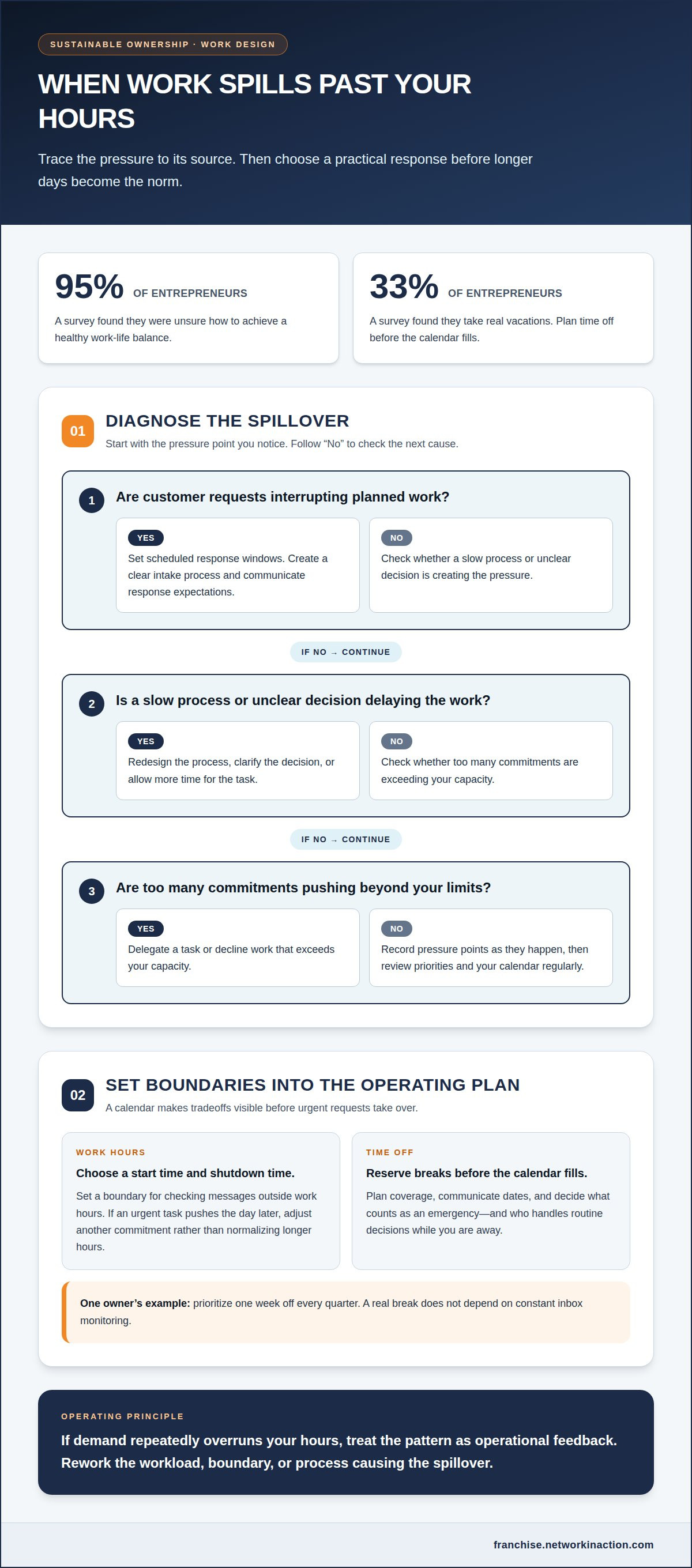
During startup, work can spill into evenings because every open task feels urgent. A survey found 95% of entrepreneurs are unsure how to achieve a healthy work-life balance. Treat that as an operating-design problem: define weekly priorities, then block time for focused work, administration, and recovery. A calendar exposes tradeoffs before urgent requests take over.
Set specific work hours and stick to them. Choose a start time, a shutdown time, and a boundary for checking messages outside those hours. For example, handle customer requests during scheduled response windows rather than interrupting every work block. If an urgent task pushes your day later, adjust another commitment instead of letting longer hours become the norm. Consistent routines can reduce daily stress.
Time off needs the same deliberate scheduling. Only 33% of entrepreneurs take real vacations, so reserve breaks before the calendar fills. One business owner prioritizes one week off every quarter; plan coverage, communicate dates, and prepare key tasks before leaving. A vacation that still depends on constant inbox monitoring isn’t a genuine break. Decide what counts as an emergency and who handles routine decisions while you’re away.
To identify work-related stressors, record each pressure point as it happens. Note whether it comes from customer demands, a slow process, an unclear decision, or too many commitments. Then choose a response: delegate a task, redesign the process, allow more time, or decline work that exceeds your capacity. If last-minute requests repeatedly disrupt planned work, for instance, set a clear intake process and response expectations.
A healthy balance won’t happen by accident. Protect personal commitments alongside business priorities, and review your calendar regularly. If demand repeatedly overruns your hours, treat that pattern as operational feedback. Rework the workload, boundaries, or process causing the spillover instead of accepting permanent overwork as the cost of ownership.
3. Business ownership and mental distress
Business ownership doesn’t automatically reduce burnout. Salaried employees and entrepreneurs are equally likely to experience it. Yet ownership can bring pressure from economic risk, isolation, and intense personal investment. A Finnish twin study found workers who transitioned to self-employment reported, on average, 24 per cent higher stress levels over a six-year period than their twins who remained employed. Treat that possibility as a planning issue, not a reason to ignore persistent symptoms.
Some owners encounter mental distress for the first time after launching. In one set of findings, 50% reported new mental distress symptoms, including 25% experiencing depression, 20% anxiety, and 18% chronic stress for the first time. These figures point to a practical step: track changes in mood, concentration, sleep, and daily functioning. If work pressure starts affecting those areas, respond early rather than waiting for a crisis.
Founders may also hide what they’re experiencing. A survey found 54% were very stressed about their businesses, 81% hid their stress, and 72% struggled with mental health. Keep trusted relationships active instead of isolating yourself. Schedule brief conversations with friends, peers, or family, and be specific about the support you need, such as listening or help with a task.
Set realistic goals that make progress visible. Break a major launch target into achievable work blocks, then review what moved forward each week. Delegate tasks when possible; help from others can reduce pressure and dependence on the owner. If stress becomes severe, consider counseling. Regular sessions can provide dedicated time to address concerns and develop ways to manage them.
Protecting mental health is part of running a business, not a reward for finishing every task. Choose someone to contact when pressure rises, identify responsibilities that can be shared, and schedule recurring check-ins to assess your workload. These steps can help you notice distress and respond before strain takes over your decisions.
4. Elements of a transition plan
Build your transition plan around evidence, finances, and a clear decision point. Start by documenting your business model, target customers, expected expenses, income assumptions, and weekly workload. Include three or more years of business financials when preparing a transition plan. If you’re starting from scratch, record your assumptions and update them as customer conversations reveal new information.
Should you start while employed or quit first? If your schedule allows, test demand and refine your offer while employed, then set a departure point based on clear business and financial milestones. Leaving first may make sense when the business requires your full attention, but weigh that need against household obligations and available cash reserves.
How much savings should you have before leaving? Calculate a runway covering six to twelve months of living costs, as Natalie Tran recommends. Include recurring household expenses, and don’t base the estimate on optimistic revenue projections. Let your spending and essential commitments shape the target.
Use the transition period to strengthen execution. Mike Reid recommends joining an entrepreneur’s team for 12 to 24 months to learn its systems, practices, and market. Brandon Fluharty recommends reflecting on what you’ve learned over the past three years when documenting your expertise. These steps can clarify which skills and operating habits your next venture will require.
How can you validate an idea and find paying customers before quitting? Define a customer problem, present a clear offer, and ask prospective buyers about their current solution and what would make them pay for a better outcome. Seek a paid pilot, initial order, or signed commitment; compliments alone don’t establish demand. Track objections and recurring requests, then refine the offer based on buying behavior.
A written plan for transitioning from a high-stress job to business ownership should end with a review date and specific decision criteria. Link your next move to evidence such as customer commitments, a workable financial runway, and confidence in delivering the offer. This turns a major career change into a sequence of deliberate tests.
Network In Action: Franchise a business opportunity
Network In Action offers a franchise opportunity for professionals ready to lead local business referral groups. Its model centers on monthly networking groups, with one professional per industry, and relationship-building without forced referrals. It may suit you if you want to lead a professional community on your own terms.
Franchisees receive comprehensive training and ongoing support to build and manage groups of small to mid-sized business owners. Monthly meetings and a technology platform, including an app and CRM, help keep participants connected and bring structure to a business centered on professional relationships.
If community leadership aligns with your goals, explore the Network In Action franchise opportunity and consider how it fits your transition plan.
Make Your Next Move Deliberately
Deciding how to transition from a high-stress job to business ownership is less about escaping quickly and more about choosing the work and responsibilities you want to build around. Give that decision time. Consider whether your strengths are best used in creating a company from scratch, leading a team, or building a professional community. The right direction should align with your ambitions and the life you want your work to support.
Use your transition plan as a decision filter, not a deadline. Revisit your priorities, weigh the tradeoffs, and move forward when the next step fits your goals. Explore Network In Action as you consider what comes next. A thoughtful move can open a more purposeful path, built on choices you make with clarity and confidence.
Frequently Asked Questions
What Are the Top Stressors in Business Ownership?
Common pressure points include unpredictable decisions, customer conflict, and switching among sales, delivery, and administration. Notice which situations repeatedly trigger tension, then change the operating conditions: clarify who approves exceptions, standardize customer updates, or assign someone to handle routine follow-ups. For example, a written process for resolving a delayed order can reduce interruptions and help you focus on decisions that need your attention.
Why Business-Transition Planning?
Transition planning helps you make a deliberate change instead of letting one difficult workday dictate your timing. It also makes tradeoffs visible: consider how leaving affects household responsibilities, employer benefits, and commitments that need a handover. A written plan gives you criteria to revisit as circumstances change, so you can adjust the pace without losing sight of why you’re pursuing ownership.
How can I plan a gradual transition and set milestones for quitting my job?
Build milestones around evidence that you can deliver consistently, not just enthusiasm for the idea. Define what must be true before each move, such as completing a pilot, documenting a repeatable delivery process, or securing a dependable pipeline of prospects. Review progress with a trusted adviser, then revise the next milestone if the work takes longer or customers respond differently than expected. Tie your resignation decision to those criteria.