
Reciprocity grows through clear requests, useful introductions, and reliable follow-through. To create a culture of reciprocity in a referral group, make it normal to explain what help you need, respond to other members’ requests with relevant support, and share outcomes so the group learns what works. The goal isn’t to trade favors on demand. It’s to build trust through thoughtful, ongoing contributions.
Strong professional relationships can open doors, but goodwill alone won’t make a group’s support effective. Learn to ask for help clearly, match referrals to real needs, and encourage members to pay support forward without keeping score. Practical group habits, meeting structures, and follow-up can turn reciprocity from a nice idea into a consistent part of relationship-driven growth.
Key Takeaways
- Make clear, specific requests part of group conversations so members can spot where their experience and connections can help.
- Build confidence to ask by making requests focused, timely, and easy for others to act on.
- Structure reciprocity rings around a shared need and a manageable group size to keep support relevant.
- Encourage members to pay support forward, creating a network where value can circulate beyond direct exchanges.
Building an asking culture
Make requests a regular part of group conversations, not an emergency measure. A clear format helps members understand what support is useful and how to provide it.
Formal and Informal Referral Models
Formal referral networks use scheduled meetings, member roles, and shared referral practices. Informal peer groups rely on relationships and spontaneous conversations, which can feel flexible but leave requests easy to miss. Compare how each model gives members time to explain their work and follow up. For example, a group can set aside part of a meeting for a member to describe a current business need.
Trust-Building and Giving Practices
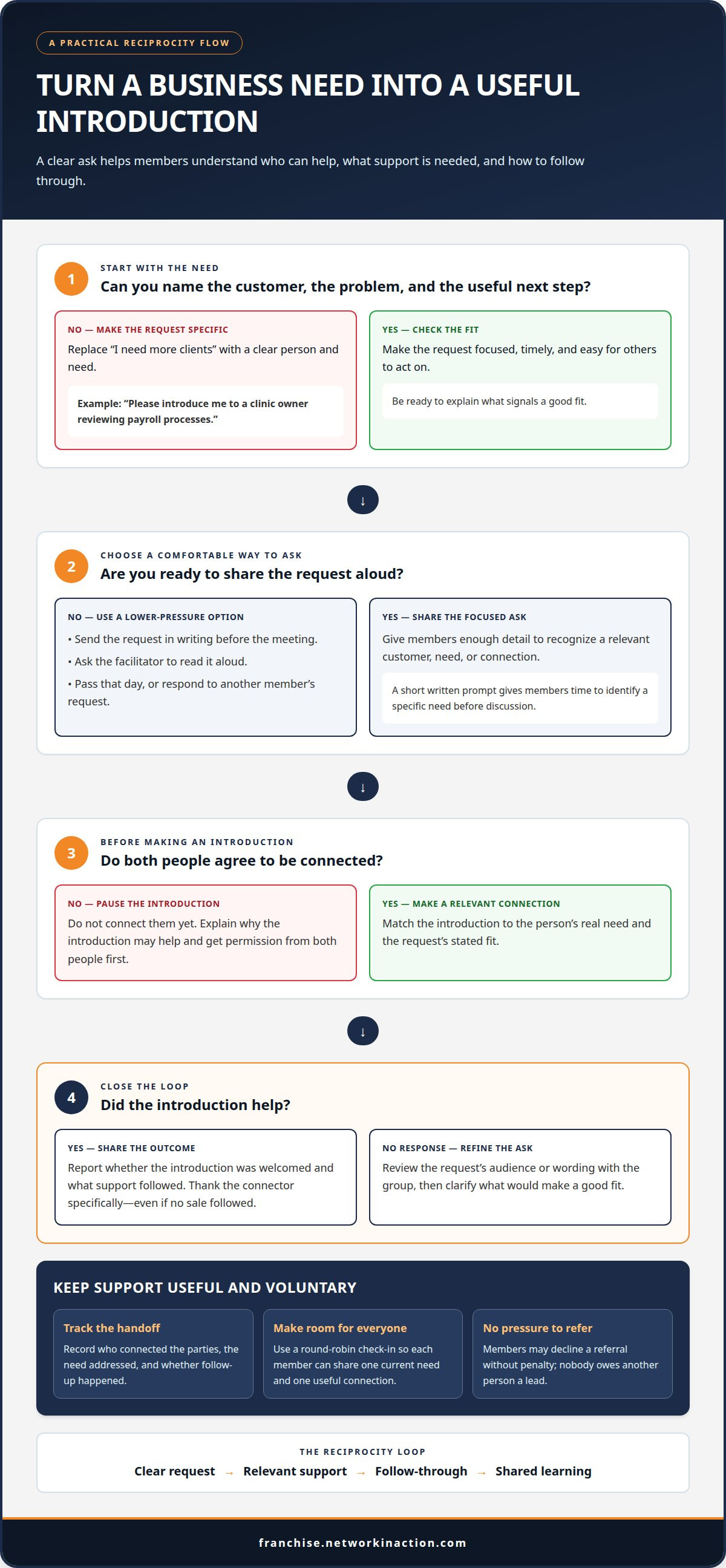
Trust grows when members make relevant introductions and respect each person’s choice to engage. Before connecting two people, explain why the introduction may help and get permission from both. Help members understand one another’s ideal customers and services with a short profile: best-fit customer, problem solved, service area, and signs of a timely need. For example, a bookkeeper might describe the business stage and records problem that indicate a strong fit.
Adapt profiles to local business realities. A group serving a tourism district might discuss seasonal operators, while a neighborhood group could map the services small storefronts need. Members can update their profiles as customer priorities change.
Referral Group Challenges and Responses
Vague requests, uneven participation, and introductions that miss a customer’s needs can undermine confidence. Replace “send me business” with a specific request, such as an introduction to a restaurant owner preparing to hire. Follow up on whether the introduction was welcomed, then refine the request based on the response. If a few voices dominate meetings, use a round-robin check-in so every member can share one current need and one useful connection.
For local relevance, review examples together: a rural group may prioritize distance, while an urban group may focus on a particular district. Keep referral criteria clear, then adapt examples to fit the community.
AAA aimed to increase brand awareness and engagement, build a larger and more diverse Millennial following, and uphold its commitment to members. This highlights why invitations to ask should feel relevant and welcoming, with members’ needs at the center.
Encouraging people to ask for help
Leaders can invite newer or quieter members to share a request before open discussion begins. A brief written prompt gives everyone time to identify a specific need, such as an introduction to a local manufacturer seeking bookkeeping support. This small change makes participation easier for members who prefer time to prepare.
Make asking practical, not performative. Give members a simple request format: name the customer, describe the problem, and explain the useful next step. “I need more clients” gives the group little direction. “Please introduce me to a clinic owner reviewing payroll processes” offers a clear lead-in. Leaders can start creating a culture of reciprocity in a referral group by modeling requests this specific.
- Share a request template before each meeting.
- Let members pass or submit a request in writing.
- Ask one focused follow-up question, such as, “What signals a good fit?”
- Close the loop by reporting whether an introduction helped.
These steps reduce the pressure to speak spontaneously. For example, a new member could send a written request to the meeting facilitator, who reads it aloud without putting the person on the spot. The member can then clarify details or listen as the group identifies possible connections.
Make participation visible without ranking members. A shared meeting record can capture requests, introductions offered, and follow-up actions. Review it at the next gathering: if a request received no response, help refine its audience or wording. If a member hasn’t spoken, offer a low-pressure choice: share a request, respond to another member, or pass that day.
New members also need context before they can ask well. Pair them with an experienced peer for an orientation conversation. Ask them to describe one ideal customer and one current business priority, then shape a first request together. Leaders can put how to create a culture of reciprocity in a referral group into practice by making that first ask specific, manageable, and grounded in the member’s real goals.
Only 1 in 5 caregivers seek expert help to check that their car seats are installed and used correctly, showing why specific, low-pressure requests can matter. Rui Kang needed help getting to see her fiancé, who lived two hours’ drive away from Fontainebleau.
Facilitating effective reciprocity rings
A reciprocity ring turns individual requests into coordinated help from a focused group. Keep participation voluntary, requests specific, and follow-through visible.
Referral Tracking and Member Thanks
Track each referral from introduction to outcome. Record who connected the parties, the need addressed, and whether follow-up happened. This shows where support is moving forward and where a handoff needs attention.
Thank members promptly and specifically. For example, tell a colleague their introduction helped start a useful conversation, even if no sale followed. Recognition reinforces thoughtful support without turning members into competitors for credit.
Meeting Frequency and Structure
Choose a predictable meeting rhythm that gives members time to build trust and act on requests. Monthly gatherings can leave time between meetings for introductions and follow-up, while the right cadence depends on members’ availability and the pace of their business needs.
Structure each session around brief updates, focused requests, and referral follow-through. Set aside time to clarify a request before members offer connections. A clear agenda keeps discussion useful and prevents the loudest voices from taking over.
Norms for Referral Pressure and Lead Quality
Set a firm norm: members may decline a referral without penalty, and nobody owes another person a lead. This protects trust and keeps introductions voluntary. A referral should match the recipient’s stated customer profile and have a genuine reason behind the connection.
Before making an introduction, explain the context and get permission from both people. If a lead is a poor match, share that feedback constructively. The member can refine the request instead of feeling pressured to accept every contact.
Measuring Reciprocity and Referral Quality
The recommended maximum size for a reciprocity ring is 25 people. A focused group makes it easier to understand requests, coordinate introductions, and see whether support is reaching the right person.
Measure more than referral volume. Review whether introductions fit the requested customer, whether both parties welcomed the connection, and whether a useful next step followed. Track contributions over time, but don’t demand equal exchanges. A member may offer expertise or access before receiving a referral in return.
Generalised reciprocity and paying it forward
Generalized reciprocity means helping someone without expecting that same person to repay you. In a referral group, you can introduce a colleague to a useful contact, then trust support to circulate through the wider network.
Useful referrals need better incentives than obligation. Recognition, visible follow-through, and confidence that members respect one another’s time encourage people to contribute. Avoid rewards that pressure members into unsuitable introductions; prioritize relevance and consent.
Make paying it forward practical with a simple routine. After receiving help, each member can identify one useful action for someone else. A marketing consultant might share a vendor introduction with a business owner, then offer a qualified prospect to another member. The return doesn’t need to come from the original recipient.
Use a shared record to capture the request, contribution, and any follow-up. Review examples at meetings, focusing on how the introduction helped, not just whether it produced a sale. This shows members that useful support can include expertise, context, or access as well as direct referrals. It also gives the group a way to improve future introductions.
A kidney donation chain offers a striking example of help moving beyond a direct exchange. Matt Jones donated a kidney to a stranger in 2009, beginning a transplant chain described as changing the lives of 20 people. Business referrals aren’t equivalent to medical donations, but the example illustrates how one act can enable further help across a network.
To reinforce this mindset, leaders can recognize specific acts of generosity, invite members to share lessons from successful introductions, and make it acceptable to decline a poor-fit referral. These practices reward sound judgment rather than referral volume and prevent reciprocity from becoming a ledger of favors.
If building a professional community around shared value fits your goals, explore the opportunity to lead one.
Network In Action: Franchise a business opportunity
Network In Action offers a franchise opportunity for professionals who want to lead local referral groups and build business communities. Its model replaces weekly meeting routines with monthly gatherings, supported by a technology platform that keeps members connected between meetings.
For community-minded entrepreneurs, the opportunity combines relationship-driven growth with a structured business model. Franchisees receive training and support to build and manage groups of small and mid-sized business owners. The approach emphasizes quality connections, voluntary referrals, and practical ways to strengthen professional relationships.
If you’re considering a leadership role in modern networking, explore the franchise opportunity and see whether it aligns with your goals.
Turn Reciprocity Into a Leadership Practice
Make reciprocity part of how your group operates, not an occasional burst of goodwill. Knowing how to create a culture of reciprocity in a referral group gives you a practical foundation; leadership turns it into a community members can sustain. Start by choosing one habit to strengthen, such as clearer requests or better follow-through, and invite members to shape it together.
That work can also lead to a broader opportunity. Network In Action offers a franchise business opportunity for people interested in leading local professional communities. If building a referral group aligns with your ambitions, explore the franchise and consider whether it supports your goals.
Contact Network In Action to explore the opportunity and consider your next step. Strong business communities begin with deliberate leadership, and you can help build one.
Frequently Asked Questions
What does reciprocity mean in a referral group?
Reciprocity means members contribute to one another’s business growth through relevant introductions, useful expertise, and timely follow-through. It doesn’t require equal referrals in return. For example, a designer might share a reliable printing contact with a fellow member, while another member later offers feedback on a proposal. The value comes from consistent, thoughtful participation, not tracking favors or promising business.