A consulting franchise is more than a consulting practice with a familiar name. Franchise models for consultants and coaches pair a brand with a repeatable operating system, training, and ongoing support, while the franchisee builds a client base and delivers the service. Revenue depends on the model’s fee structure and your ability to attract and retain clients. Royalties and marketing fees can reduce what remains.
Expertise alone doesn’t build a scalable business. A structured framework can help you deliver value, develop relationships, and grow beyond one-to-one work, but the investment and support differ by system. This article explains how consulting franchises work, what training and support may include, how fees affect revenue, and what to compare before choosing a model. It also explores how a relationship-driven, technology-enabled networking franchise may suit professionals looking for a structured path to business ownership.
Key Takeaways
- Compare each franchise’s brand, operating system, training, and ongoing support to see how well it fits your strengths and growth goals.
- Distinguish coaching, which centers on accountability and execution, from consulting, which typically focuses on analysis and recommendations.
- Assess revenue potential alongside royalties, marketing fees, client retention, and the work required to build lasting relationships.
- Review upfront investment and operating expenses as part of the full business commitment, then explore whether Network In Action’s franchise opportunity aligns with your goals.
1. Franchise brands, systems, training, and support
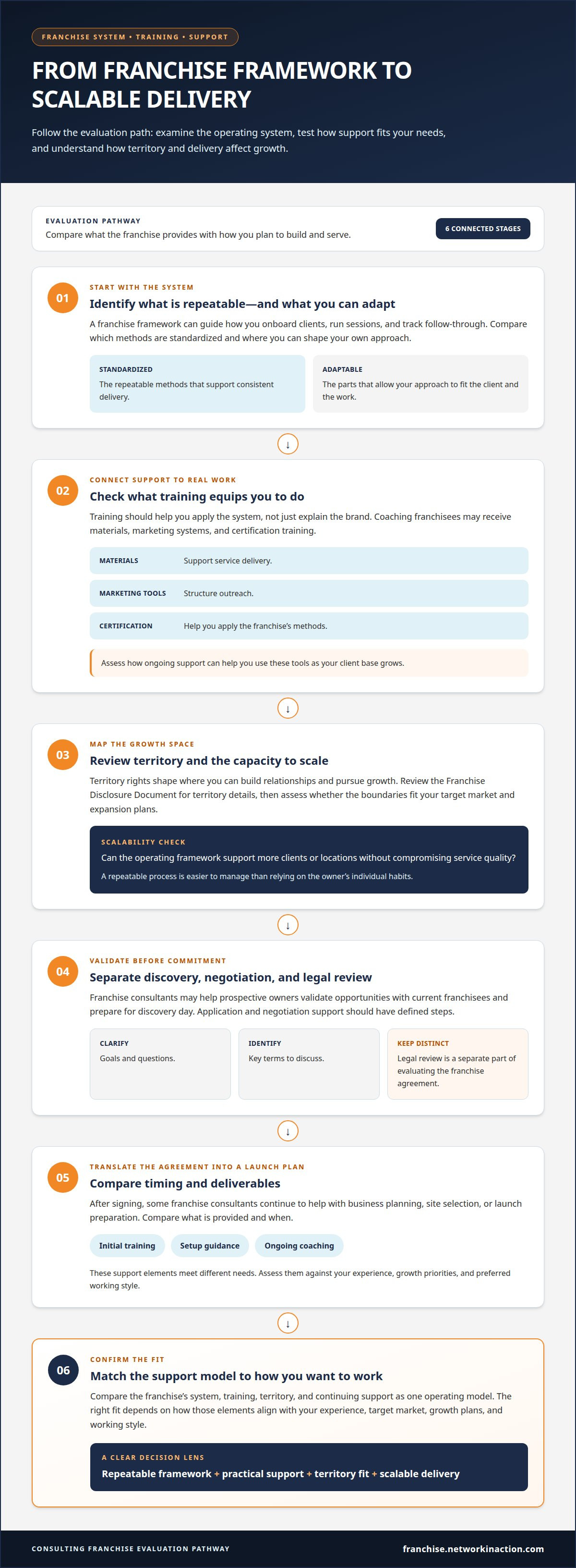
Relationship-based franchise systems scale through repeatable frameworks, leadership development, and consistent delivery. For consultants and coaches, a system can guide how you onboard clients, run sessions, and track follow-through. Some coaching brands combine group coaching with one-to-one sessions. Compare systems by identifying which methods are standardized and where you can adapt your approach.
Training should prepare you to use the system, not just explain the brand. Coaching franchisees may receive coaching materials, marketing systems, and certification training. Connect each element to a practical task: materials support service delivery, marketing tools structure outreach, and training helps you apply the franchise’s methods. Assess how ongoing support can help you use these tools as your client base grows.
Territory rights shape where you can build relationships and pursue growth. Review the Franchise Disclosure Document for territory details, then consider whether the boundaries fit your target market and expansion plans. Scalability also depends on whether the operating framework can support more clients or locations without compromising service quality. A repeatable process is easier to manage than relying on the owner’s individual habits.
Franchise consultants may help prospective owners validate opportunities with current franchisees and prepare for discovery day. This support can give buyers a clearer view of a business before they commit. Application and negotiation support should have defined steps, such as clarifying goals, organizing questions, and identifying key terms to discuss. Legal review is a separate part of evaluating a franchise agreement.
After signing, some franchise consultants continue to help with business planning, site selection, or launch preparation. This support can turn decisions into an operating plan. Compare the timing and deliverables: initial training, setup guidance, and ongoing coaching meet different needs. Look for a system whose support fits your experience, growth priorities, and preferred working style.
2. Why Choose a Business Coaching Franchise?
A business coaching franchise can appeal to professionals who want to help owners make better decisions. Its value lies in turning your experience into a clear client proposition. For example, a former operations executive might help owners assess priorities and make deliberate business choices. Before choosing, define the problems you understand well and the clients you can credibly serve.
Compare franchise options by their target audience and the outcomes their models emphasize. One system may serve early-stage entrepreneurs, while another focuses on established business owners facing a strategic transition. That distinction affects your conversations, client expectations, and the expertise you draw on each day. Identify the audience that best matches your experience, professional network, and motivation to lead.
A brand’s history and scale offer another way to assess fit. Review how its methods and target market have evolved, then consider whether its current structure suits your ambitions. A smaller system may offer a different operating environment from a brand with a broader footprint. Scale alone doesn’t prove fit. Examine the model’s consistency, how it responds to owners’ changing needs, and whether its direction aligns with your approach.
Use a practical decision process: define your ideal client, list the business challenges you want to address, and compare each franchise’s positioning with that list. Then assess whether its structure supports the leadership role you want. Don’t assume a familiar brand will suit your working style. Franchise models for consultants and coaches vary in audience, expectations, and delivery. Choose one that turns your expertise into a focused, credible business direction.
More than 60% of small- and mid-sized businesses rely on some form of external coaching or consulting to improve productivity, leadership, or profitability. This demand can make coaching an appealing path, but it does not guarantee that every franchise will suit your strengths or goals.
Consider how the model helps you build trust, clarify client priorities, and deliver useful guidance. A strong personal fit can help you make the most of the opportunity while grounding your work in the expertise you bring.
3. Franchise benefits and recurring revenue
Relationship-based franchises depend on sustained engagement, not one-time transactions. That structure can give owners more opportunities to support clients over time. For example, a business coach might help an owner set goals, review progress, and address barriers in follow-up sessions. A consistent monthly coaching cadence can make accountability part of the service rather than an occasional intervention.
Revenue depends on what clients pay for, how often they return, and the work required to deliver value. Ongoing relationships can lead to repeat engagements when clients see progress and stay active. Retention, however, depends on useful guidance, clear follow-through, and trust. Build your service around specific client goals, then review whether each interaction helps advance them.
Franchise costs can also affect operating margins. Some coaching franchises charge ongoing royalties or marketing fees. Include these obligations in your revenue plan, along with the time and resources needed to serve clients. A strong sales period doesn’t tell the whole story. Track revenue after recurring franchise charges and operating expenses to see what the business retains.
Leadership can create additional value in a community-based model. Members may keep participating because they benefit from shared experience, trusted relationships, and relevant introductions. Retention is therefore more than a sales measure: it can show whether the community delivers ongoing value. Assess how the franchise supports member engagement and whether its model rewards relationship-building instead of constant prospecting.
During a career transition, compare the franchise’s growth engine with your preferred working style. Ask how much revenue depends on ongoing client relationships, repeat participation, or new sales. Then map the recurring work: client support, community leadership, and follow-up. Franchise models for consultants and coaches balance these demands differently. Choose a structure that fits the value you can consistently deliver, while accounting for royalties and marketing costs.
4. Initial investment and franchise fees
Assess the full commitment, not just the initial franchise fee. Your investment may include the franchise purchase and operating expenses during the launch period. Most consulting franchises require capital for the purchase and 6-12 months of operating expenses. Build a working budget around setup needs, marketing activity, and the time required to develop client relationships.
Use the Franchise Disclosure Document (FDD) to identify fees, ongoing royalties, and territory rights. These terms affect operating costs and your ability to serve a market. Separate one-time charges from recurring obligations in your financial plan, then model how each affects profitability as client revenue grows. Even a proven brand framework needs a realistic plan for local execution.
Compare franchise opportunities by what each fee supports. Training, marketing systems, launch guidance, and ongoing assistance can affect the resources you need to operate independently. Match those provisions to your skills and business goals. For example, an owner with limited marketing experience may value structured marketing support more than tools they already use effectively.
Accountability matters after purchase, too. Set a regular strategic review of revenue, operating costs, client retention, and required franchise payments. Use those measures to assess whether the business model supports your profitability goals. Give territory rights the same attention: boundaries can shape where you build relationships and how you approach future growth.
Before signing, review the FDD carefully and have a franchise attorney assess the franchise agreement. A financial advisor can help evaluate whether the planned investment fits your financial position. Bring focused questions to each discussion: which fees recur, what support they fund, and how the territory is defined. To explore the franchise opportunity and its investment framework, download the franchise kit.
Network In Action: Franchise a business opportunity
Network In Action offers a franchise opportunity for professionals ready to lead local business referral groups. Its model replaces weekly networking meetings with monthly gatherings, while a proprietary technology platform helps members stay connected between meetings. Franchisees receive training and ongoing support to build and manage groups of small and mid-sized business owners focused on quality referrals and strong relationships.
This opportunity may fit you if community leadership, relationship-driven growth, and a structured business model align with your goals. The approach emphasizes curated participation without forced referrals, giving local leaders a framework for building professional credibility and meaningful connections. Explore the model and consider whether its systems fit your experience and ambitions. Review the franchise opportunity details.
Choose the Business You Want to Lead
Start by defining the role you want your business to play in your life. Do you want to advise clients, coach owners through execution, or lead a professional community? Your answer can help you assess whether ownership aligns with your strengths, preferred pace, and long-term ambitions.
Franchise models for consultants and coaches offer different routes to independence, but finding the right fit starts with your priorities. Consider the impact you want to make, the relationships you want to build, and how you want to grow your professional influence. Then explore Network In Action’s franchise opportunity with a clear view of what matters most to you.
If community leadership and relationship-driven growth fit your direction, take a closer look at Network In Action’s franchise opportunity. Explore the Network In Action franchise opportunity and decide whether it aligns with the business you want to build.
Frequently Asked Questions
What is a Consulting Franchise?
A consulting franchise is a franchise business centered on providing consulting services to clients. A franchise consultant, by contrast, helps prospective buyers explore franchise opportunities. For example, a consulting franchisee may advise a business owner on operations, while a franchise consultant may help someone assess whether business ownership suits their goals. Clarifying the role you mean helps you evaluate the right opportunity.
The Bottom Line: Franchise or Independence?
A franchise trades some decision-making freedom for an established business structure; independence gives you more control over how you operate. Consider how much you value setting your own brand, client process, and business priorities. Also ask whether you’d rather build every element yourself or work within an existing model. The right choice depends on which trade-offs suit your working style and ownership goals.
Why Choose a Business Coaching Franchise?
A business coaching franchise may suit you if you want to help owners turn business goals into measurable commitments. For example, a client could set a target for improving a key performance indicator, agree on actions, and review progress in later sessions. This approach makes structured accountability central to the work. Consider whether you enjoy helping business owners clarify priorities and stay focused on their objectives.