A franchise lead pipeline doesn’t begin and end with an ad. Understanding the franchisor’s role in lead generation means seeing how the brand attracts prospective franchisees, qualifies their interest, and supports their progress toward an agreement. The process has four stages: attracting visitors, converting visitors into leads, developing leads into candidates, and turning candidates into franchisees.
It’s easy to assume that more inquiries mean more growth, but lead volume alone doesn’t show whether prospects fit the opportunity or are moving forward. The franchisor sets the strategy and candidate criteria, while development teams, marketing channels, and external partners help attract and advance prospects. Understanding how those roles connect makes it easier to assess progress beyond the initial inquiry and build a coordinated franchise lead-generation process.
Key Takeaways
- Define the candidate profile before choosing campaigns so marketing attracts prospects aligned with the opportunity.
- Coordinate franchisor, development-team, and partner responsibilities to keep promising inquiries moving through the pipeline.
- Compare lead sources by the quality and progression of candidates, not just the number of inquiries they produce.
- Map the process from first visit to franchise agreement, then identify where prospects need clearer information or follow-up.
1. What is franchise lead generation?
Franchise lead generation is the process of attracting people who may want to open a franchise. The goal is not simply to collect contact details. It is to build a pipeline of prospects who understand the opportunity and fit the brand’s goals. Strong programs connect initial interest with useful information, thoughtful follow-up, and a clear next step. Each stage should help a prospective franchisee decide whether the business model matches their experience, resources, and ambitions.
Start with the franchise goal. A brand seeking owner-operators needs a different message from one seeking experienced multi-unit operators. Define the candidate profile before choosing advertising themes or lead sources. Consider operating experience, geographic priorities, preferred business skills, and the strengths that distinguish the brand. For example, a service-based franchise might explain its operating model, while a community-focused concept could show how local relationships support growth. Match each message to a real feature of the opportunity, then use incoming inquiries to refine the profile.
The franchise opportunity website should turn that positioning into a clear story. Explain what the business does, who it serves, and what ownership involves. Use specific examples, such as a day-to-day operating scenario, to make the model tangible. Organize pages so visitors can move from the brand story to business details and then to an inquiry form. Keep the language consistent across landing pages and advertising. A focused website helps prospects understand the opportunity before they enter the pipeline.
A strong franchise brand depends on consistency and credible information, not slogans alone. Explain the company’s background, the franchisee’s obligations, and the support structure in plain language. According to the Federal Trade Commission, the Franchise Disclosure Document contains 23 items covering matters such as the franchisor’s background, fees, obligations, territory rights, and financial performance representations. That document gives candidates a structured view of the offer. Align website claims with its disclosures, and use each conversation to answer questions accurately. Clear storytelling builds informed interest and gives qualified prospects a sound basis for deciding whether to continue.
2. Franchisor and franchise development team responsibilities
Understanding the franchisor's role in lead generation helps define who owns each handoff. The franchisor sets the operating framework for franchise sales, approves brand messaging, and assigns accountability for each stage. The development team needs clear responsibility for reviewing inquiries, following up, and keeping records. For example, when marketing passes a new inquiry to sales, the handoff should include the lead source, the prospect’s stated interests, and the agreed next action. This structure reduces gaps and gives each team member a defined role.
Testing makes the strategy more efficient. Change one element at a time, such as an advertising message, landing-page headline, or inquiry form. Then compare the quality of the resulting conversations, not just the number of submissions. If a campaign attracts people outside the target geography, adjust its audience or message. If prospects repeatedly ask the same question, improve the relevant content. This feedback loop connects brand strategy with real candidate behavior.
A deeper understanding of the franchisor's role in lead generation also clarifies how teams should assess progress. Track each lead through defined pipeline stages, from first contact to qualified conversation, application, disclosure progression, and awarded franchise. Useful measures include contact rate, qualification rate, meeting conversion, award rate, cost per qualified opportunity, and cost per awarded franchise. Record the original channel for each lead. This helps the development team identify sources that move prospects forward and shows marketers which campaigns prompt meaningful action.
Broker referrals offer another route into franchise development. Franchise sales brokers generally solicit purchases as independent agents and receive commission. They generally act as sales agents for the franchisor, not as the prospect’s buyer’s agent, unless they state in writing that they will protect and counsel the prospect. Define how broker-sourced leads enter the pipeline, who owns follow-up, and how each conversation is recorded. Consistent handoffs help the team assess referrals alongside other channels and improve the franchise sales process.
3. Franchise lead-generation channels and partner roles
Franchise candidates can come through franchise portals, paid search, social campaigns, brokers, trade shows, and content marketing. Each channel reaches people at a different point in their research. A portal can capture active opportunity seekers, while an educational article may reach someone still comparing business models. Choose channels that match the candidate profile and expansion goals. A broad mix matters less than knowing which sources bring prospects who fit the brand.
Digital campaigns create visibility and direct prospects to focused landing pages. Paid search can reach people looking for a franchise in a particular industry; social campaigns can introduce the opportunity to people who match selected audience criteria. The landing page should continue the campaign’s message, explain the next step, and make it easy to express interest. For example, a campaign about local ownership should lead to content describing the owner’s role, not a generic brand page.
Franchise portals and lead-generation networks can collect prospect details through forms, then share those details with franchisors for compensation. Their role is to introduce potential candidates, not complete the franchisor’s sales process. Trade shows create opportunities for direct conversations, while content marketing gives candidates useful information before they speak with development staff. Brokers can also introduce prospects. Set a clear handoff for every partner: record the source, share relevant context, and assign follow-up.
Partners can help a brand expand its reach, but the franchisor still needs to provide a consistent candidate experience across channels. Use the same core opportunity details in portal listings, social campaigns, broker materials, and event conversations. Then assess each source by the prospects it advances, rather than celebrating inquiry volume alone. If a portal generates interest but few qualified conversations, revise its listing or shift resources. If trade-show conversations progress, give that channel a stronger role in future campaigns. This makes channel selection a deliberate part of franchise development.
An example Facebook advertising campaign acquires 50 leads, but the total alone does not show whether the channel is delivering suitable candidates. Review the conversations that follow and compare the leads’ fit with the brand’s requirements. This keeps campaign decisions tied to progression and candidate quality, not just the initial response.
4. Four stages of franchise lead generation
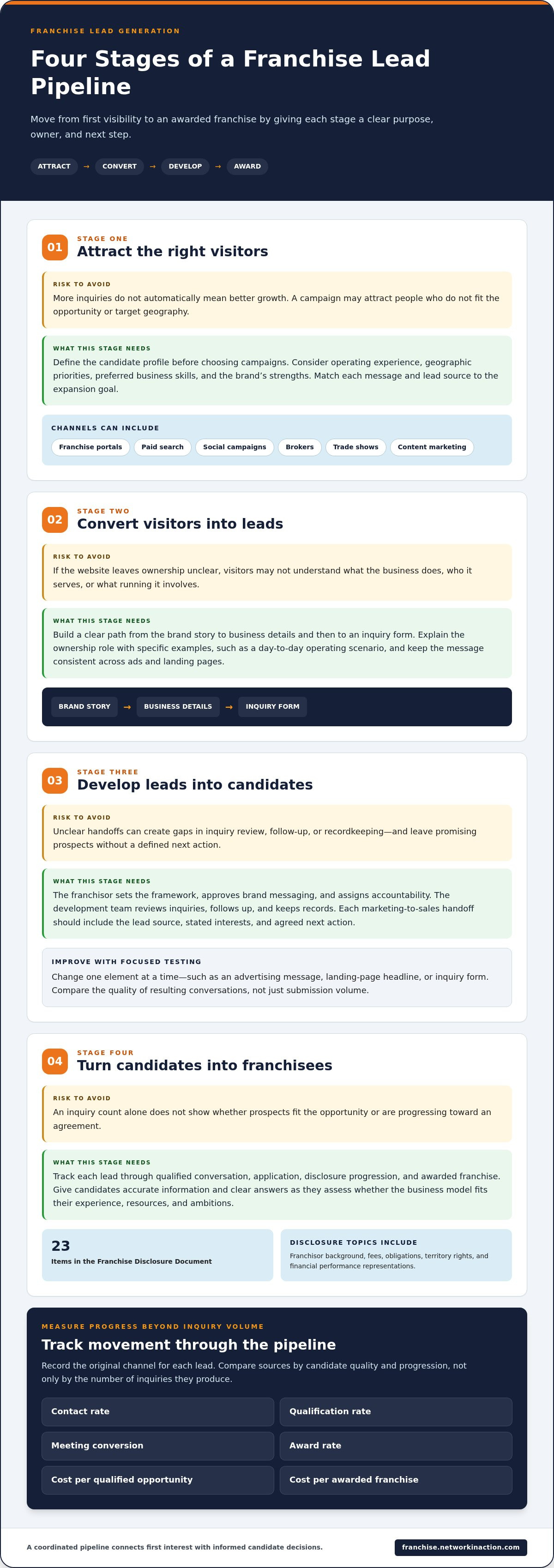
Franchise lead generation moves through four stages: attract visitors, convert visitors into leads, develop leads into candidates, and turn candidates into franchisees. Each stage has a distinct purpose. The franchisor can use this sequence to identify where interest slows and improve the next step, rather than treating every inquiry as a sales-ready prospect.
First, attract visitors who might fit the opportunity. Search campaigns, social advertising, franchise portals, and useful content can bring prospective owners to a brand’s website. Match each campaign to its intended audience. For example, a message aimed at experienced operators should lead to information that clearly explains the operating opportunity. Track which sources attract visitors who continue exploring, not just which sources produce clicks.
Next, turn visitors into leads by giving them a clear reason to share their details. A focused landing page can explain the business model, answer an immediate question, and offer a simple inquiry form. Keep the page aligned with the campaign that brought the visitor there. If an advertisement promises information about ownership, the form should lead to relevant follow-up, not an unrelated sales message.
Then develop leads into candidates. The development team can review each person’s stated interests and engagement, identify gaps, and arrange a useful conversation. A prospect who needs more time may benefit from educational material before a sales discussion. Qualification should connect the candidate’s goals and circumstances with the franchise’s requirements, rather than relying on interest alone.
Finally, guide suitable candidates through the franchise sales process toward an agreement. Use consistent conversations to address outstanding questions, explain next steps, and keep records current. Review progression across all four stages: visitor activity, completed inquiries, qualified conversations, and franchise awards. If leads stall after submitting a form, strengthen follow-up; if qualified candidates disengage, examine the information or conversations they receive. To explore a franchise opportunity, review the franchise information kit.
The franchising of a business typically takes four to six months, or roughly 120 days, divided into four phases of about 30 days each. The franchise fee is typically paid at or around the stage when the franchise agreement is executed, so candidates should understand the timing before reaching that point.
Network In Action: Franchise a business opportunity
Network In Action offers a franchise business opportunity for people ready to lead local professional referral groups. Its model combines monthly meetings with a proprietary technology platform that keeps members connected between meetings. Franchisees receive training and support to build and manage groups of small to mid-sized business owners focused on high-quality referrals and return on investment.
This opportunity may suit you if you want to build a relationship-driven business around community leadership rather than rely solely on cold prospecting. It provides a structured path to explore franchise ownership and consider how the model aligns with your goals, strengths, and preferred lifestyle. Review the opportunity details to decide whether leading a local business community fits your next move.
Explore the franchise opportunity at franchise.networkinaction.com.
Turn the Framework Into Your Next Move
Understanding the franchisor’s role in lead generation can also help you assess your strengths as a community leader. Consider whether you enjoy building professional relationships, creating an environment where business owners can connect, and guiding a local business opportunity with a clear operating structure. Those priorities can help you decide whether franchise ownership aligns with your ambitions and preferred way of working.
Network In Action offers a franchise business opportunity for people interested in leading local professional referral groups. Explore how that path fits your goals, leadership style, and vision for the future. The next step can be a focused conversation, not a rushed decision. Explore the Network In Action franchise opportunity and consider whether it’s the right direction for you. A thoughtful move starts with asking what kind of work and impact you want to build.
Frequently Asked Questions
What is franchise lead generation?
Franchise lead generation is the process of identifying and developing prospective franchise owners. To assess whether an inquiry fits, compare the person’s stated goals with the brand’s ownership expectations, then note any gaps for a follow-up conversation. For example, if someone is interested but unclear about the owner’s day-to-day role, share relevant details and assess whether the opportunity still aligns with their plans.