A recognizable franchise name can open the door, but it can’t run the business for you. If you’re asking what the most common reasons new franchisees fail are, start with underestimating the capital and time required, choosing a business model that doesn’t fit, weak local execution, and gaps in training or ongoing support. Low customer trust can add another hurdle, especially when the brand is unfamiliar in the local market.
That’s the tension at the heart of franchising: a proven system can provide structure, but results still depend on the fit between the business and its owner. Success takes more than enthusiasm. You need a clear reason to own the business, realistic expectations, and a commitment to lead its day-to-day operations.
This article explains why franchisees struggle, which decisions can strengthen your position, and why brand trust and hands-on ownership matter. You’ll also see how a relationship-driven, technology-enabled franchise opportunity can suit an owner who wants to build a local business community with greater flexibility and recurring-revenue potential.
Key Takeaways
- Assess whether a franchise’s day-to-day work fits your skills and goals, not just whether you like the brand as a customer.
- Build local trust through consistent customer experiences and a clear understanding of the community you serve.
- Plan for hands-on ownership: strong operations depend on active leadership, staff training, and focused local marketing.
- Look closely at the support system and business model so you can spot risks early and lead with informed expectations.
Brand recognition and customer trust
A familiar brand can help attract first-time customers, but recognition doesn’t guarantee loyalty. Local owners still need consistent service, responsive operations, and repeat business. A national name may open the conversation, but each customer experience shapes whether trust grows. Ask, “What are the most common reasons new franchisees fail despite a recognizable brand?” Inconsistent delivery and weak local relevance can quickly erode confidence in both the location and the wider network.
Franchise failure counts need context. Subway recorded 4,148 franchise failures in the United States during 2017-2019; Coverall recorded 1,986, and Health Mart recorded 1,978. Advanced Fresh Concepts recorded 1,610, Good Neighbor Pharmacy 1,414, Jackson Hewitt 916, Bimbo Bakeries 839, and N2 Publishing 827 during that period. These are counts, not failure rates. A larger network may have more closures because it has more locations. Failure totals can also include terminations, non-renewals, and locations that ceased operations for other reasons.
Local competition adds pressure, including competition between locations carrying the same brand. Overlapping territories or nearby sites can divide customer attention and weaken each owner’s marketing return. Before committing to a territory, examine local demand, competing businesses, and same-brand locations. Then identify why customers would choose your location, such as convenient access, responsive service, or strong community relationships.
Marketing works best when national recognition meets local relevance. Build a plan around nearby customers, their needs, and the channels they use. During due diligence, review Item 20 of the Franchise Disclosure Document for openings and closures over the previous three years. The Federal Trade Commission regulates the FDD. Ask, “What are the most common reasons new franchisees fail in this brand’s local markets?” Compare the location history with local competition, marketing support, and customer experience before judging your chances of earning lasting trust.
Conduct thorough due diligence on a prospective location and local market rather than relying only on the franchisor’s forecasts. The failure rate among new franchises is 10%, while independent businesses have a failure rate of 60%. In 2018, 1% of franchises closed due to commercial failure. A plumbing failure at 2:00 a.m. illustrates the operational demands a franchise owner may need to handle.
What is the most crucial factor for a successful franchisee?
The strongest starting point is fit: the franchise concept must match your goals, capabilities, and preferred way of working. Enjoying a brand as a customer isn’t enough. A restaurant customer may love the menu but dislike daily staffing demands, while an entrepreneur who enjoys building relationships may thrive in a service model based on local connections. Passion can support success, but it works best when the operating reality suits you, too.
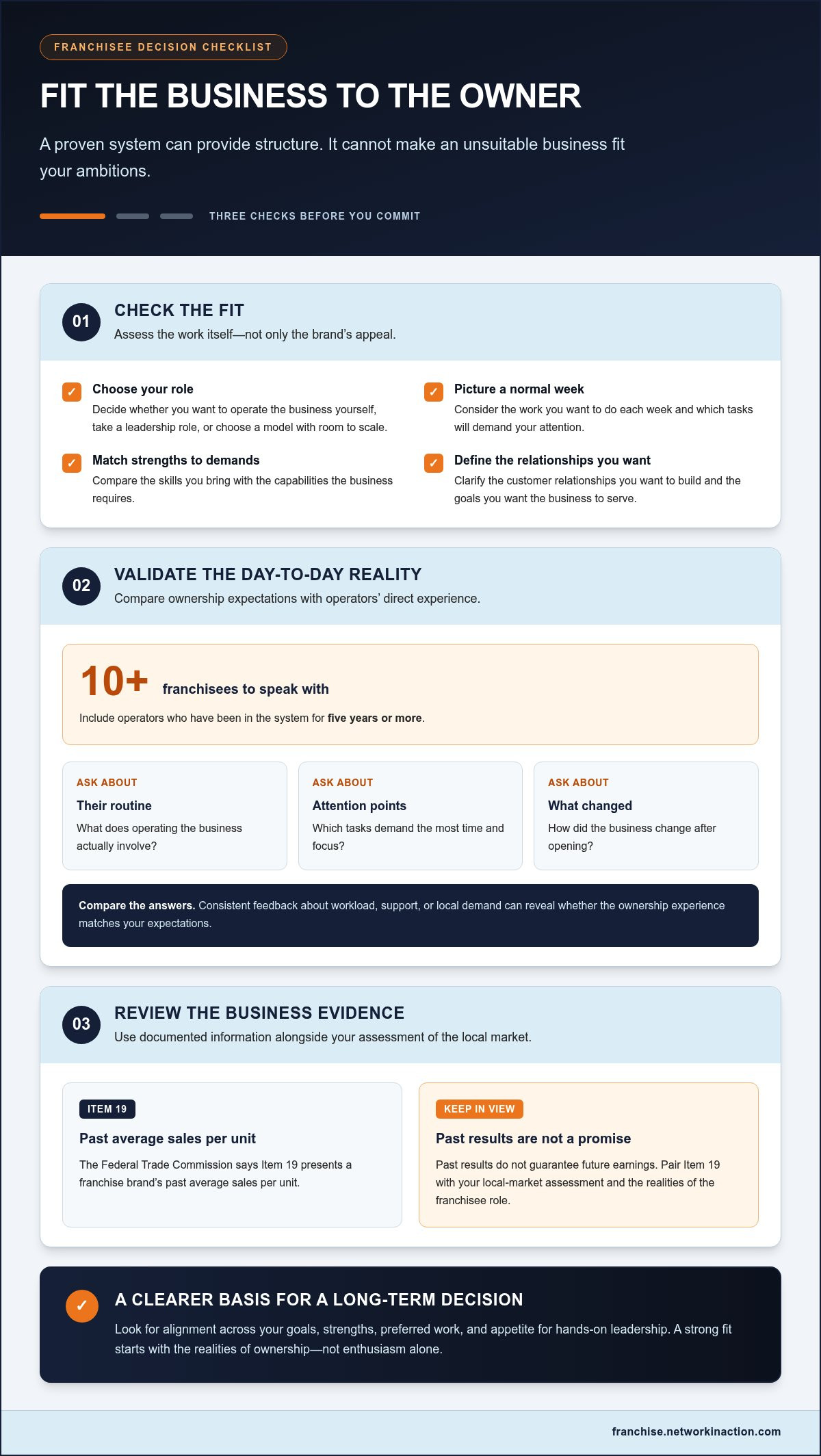
Set your priorities before comparing franchise opportunities. Decide whether you want to operate the business yourself, take a leadership role, or choose a model with room to scale. Consider the work you want to do each week, the skills you bring, and the customer relationships you want to build. Then assess each concept against those criteria. A proven system can provide structure, but it can’t make an unsuitable business fit your ambitions.
Look beyond the sales presentation. Speak with at least ten franchisees, including operators who have been in the system for five years or more. Ask what their routine involves, which tasks demand the most attention, and how the business changed after opening. Compare their answers. Consistent feedback about workload, support, or local demand can reveal whether the franchise matches your expectations. Independent conversations help separate the concept’s appeal from the realities of ownership.
Review the business evidence as well as the personal fit. According to the Federal Trade Commission, Item 19 presents a franchise brand’s past average sales per unit. It can help you assess potential profitability, but past results don’t guarantee future earnings. Pair that information with your own assessment of the local market and the franchisee role. A concept that aligns with your goals, strengths, and appetite for hands-on leadership gives you a clearer basis for a long-term decision. If you’re exploring an ownership path built around professional relationships, review a franchise opportunity alongside your criteria.
Why Franchises Fail and How to Plan for Victory
Weak execution, unsuitable locations, and gaps in training or support can undermine a franchise. Owners can strengthen their position by turning these risks into clear operating priorities.
Quality, Staff Training, and Local Marketing
Consistent product quality, capable staff, and relevant local marketing are daily disciplines, not opening-day tasks. Each affects whether customers return and recommend the business. A restaurant, for example, can lose trust if food quality varies between visits, even when its brand is familiar.
Set practical standards for service and product quality, then train staff to apply them consistently. Build local marketing around nearby customers’ needs and preferences instead of relying only on national campaigns. Track customer feedback and recurring complaints, then use those signals to adjust service, staff coaching, and local messaging. This helps align the customer experience with the brand promise.
Commitment matters in every industry. Buying a franchise doesn’t transfer responsibility for daily execution. Owners must maintain standards, lead staff, and keep local outreach active while running the business.
Franchisor Training and Ongoing Support
Franchisor training should explain both the required procedures and the reasons behind them. Ongoing support helps owners apply those lessons as conditions change. This distinction matters: following a process without understanding its purpose makes it harder to respond when a local challenge arises.
During due diligence, examine how training prepares franchisees for core tasks, customer issues, and local marketing. Ask current owners for specific examples of how support helped them solve operating problems and where they needed more guidance. Concrete experiences reveal more than broad assurances.
If a location struggles, identify the cause before changing the plan. A franchisee may ask the franchisor for additional training or to renegotiate the territory. Review customer feedback, operating routines, and local demand together. That process helps distinguish a training gap from a location or execution problem, then directs the next action toward the factor most affecting performance.
The misconception that a franchise is a passive business in a box
A franchise provides a business model, not a substitute for owner involvement. Your time, skills, and financial runway still shape the outcome.
Matching Skills to the Business Model
A skills mismatch occurs when a franchise’s daily demands conflict with your strengths or preferred role. Even a proven opportunity can be difficult to operate when its core tasks drain your time or energy.
Before signing an agreement, map a typical workweek. A people-intensive model may require hiring and coaching, while a service business may depend on local selling and customer follow-up. Compare those tasks with your experience and capacity. Choose a model that fits the work you’re prepared to lead, not simply the one with the most appealing brand.
Ramp-Up Time and Capital Requirements
Ramp-up is the period when a business builds demand and works toward break-even. Some franchises can take several years to turn a profit, so don’t treat early revenue as guaranteed income.
Plan for operating expenses across the first 6-12 months, and assess whether you can keep the business running without profit for up to a year. Revenue may take longer to arrive than projected, while the business still needs time and capital. A realistic runway helps you make operating decisions without relying on immediate sales.
Due diligence should test the economic case, not just the concept. Compare financial projections with the competitive landscape and the support available. Speak with current franchisees, verify claims independently, and investigate opening delays or missed financial targets. Review the agreement’s exit terms, too. These steps help reveal operating risks before you commit.
Franchise success statistics also need context. Economist Timothy Bates’ study found franchise survival nearing 92% after four years, compared with 47% for independent businesses. That comparison doesn’t make every franchise a sound opportunity; owner fit, execution, and financial readiness still matter. If you’re assessing whether a structured franchise model aligns with your goals, explore the franchise opportunity.
Network In Action: Franchise a business opportunity
Network In Action offers a franchise opportunity for professionals who want to lead local business referral groups. It can suit you if you’re drawn to community leadership, relationship-driven growth, and helping small and mid-sized business owners connect.
The model replaces weekly meeting demands with monthly gatherings and uses a proprietary technology platform to keep members connected between meetings. Franchisees receive training and support to build and manage their groups. That structure can help you assess whether the operating role, local relationship-building, and ongoing leadership responsibilities fit your goals and preferred lifestyle.
If you’re weighing this opportunity against your priorities for ownership, flexibility, and growth, explore the details at your own pace. Review Network In Action’s franchise opportunity and consider whether it aligns with the kind of business you want to lead.
Make your next move with intention
Knowing what the most common reasons new franchisees fail are gives you a sharper lens, but your next move should focus on personal alignment. Decide what kind of ownership you want, which responsibilities you’re ready to take on, and how the opportunity fits your wider professional goals. Clear priorities help you evaluate a franchise as an operating commitment, not just an appealing idea.
Use that clarity to explore models that connect business growth with meaningful local leadership. Network In Action offers a franchise business opportunity centered on leading professional referral groups. Consider whether that role matches the way you want to build relationships, contribute to your community, and shape your working life. Thoughtful exploration is progress, even before you make a decision. Contact Network In Action to explore franchise ownership and consider whether this path aligns with your ambitions. A well-chosen next step can turn your entrepreneurial experience into a more intentional opportunity.
Frequently Asked Questions
Why do some new franchisees fail while others succeed?
New franchisees often succeed or struggle based on how quickly they spot and address operating problems. The most common reasons new franchisees fail can compound: weak customer demand may reduce cash flow, while inconsistent execution can discourage repeat business. Track practical signals such as customer inquiries, conversion rates, repeat visits, and late payments. Review these trends regularly to identify whether pressure comes from marketing, service delivery, or cash management, then act before the issue deepens.