
Weekly networking meetings can fall short because meeting more often does not automatically build trust, generate relevant referrals, or deliver a return. Why weekly networking meetings don't work often comes down to a mismatch between the group’s format and your needs: social connection is not the same as structured business relationship-building. Attendance shows activity; referrals depend on context, credibility, and follow-through.
If you show up, make conversation, and still get few useful introductions, that does not automatically mean you are networking the wrong way. The group’s purpose, the quality of its relationships, and how members create value for one another all affect the outcome.
This article explains four reasons weekly meetings may not deliver: shallow connections, weak referral habits, poor return on your time, and a group that does not fit your goals. It also shows what to look for instead: intentional relationships, a clear business purpose, and a networking model focused on meaningful outcomes rather than attendance alone.
Key Takeaways
- Build referral potential through consistent follow-up and shared experience, not attendance alone.
- Assess networking by the quality of opportunities it creates and the time it takes to earn them.
- Choose a professional circle where trust, relevance, and intentional relationship-building come first.
- Separate social connection from business purpose, then seek a group structure that supports both clear goals and meaningful relationships.
1. Building meaningful business relationships and referrals
Why weekly networking meetings don't work often comes down to the gap between exposure and trust. A brief introduction may help people recognize your name, but making a referral puts someone else’s credibility on the line. Hearing the same elevator pitch each week is not enough. People need to understand how you work, whom you serve, and whether you follow through.
Weekly meetings can create repeated contact, but repetition alone doesn’t guarantee meaningful connections. University of Chicago relationship research describes at least 50 hours of interaction to move from acquaintance to casual friend. One-on-one conversations can create room to ask specific questions, listen closely, and understand a potential contact’s needs. Online networking can maintain contact between meetings, but digital exchanges still need personal follow-up and useful interaction.
Why do weekly meetings fail to generate referrals? Members may know each other’s services without understanding when an introduction would genuinely help. Build context by explaining the problems you solve, sharing who makes a strong referral, and asking about others’ goals. After meeting a new contact, send a personal follow-up email within 24-48 hours, as advised by the U.S. Department of Labor. Then suggest a focused conversation tied to a shared business interest.
No monthly meeting frequency guarantees stronger relationships. One commenter found one event a month worked well, while another reported diminishing returns beyond two events a month. Use those experiences as prompts to assess your own calendar: do conversations continue, do contacts remember your work, and do useful introductions follow? Track those outcomes, not attendance alone.
Common problems in weekly groups include low attendance, rushed introductions, and repetitive pitches. When members miss meetings, trust and shared knowledge can take longer to build. When everyone repeats a generic pitch, the group may learn what each person sells without learning how to spot a timely referral. Give each conversation a clear purpose, follow up consistently, and notice whether contacts become more specific and helpful over time.
2. Assessing the return on investment of networking
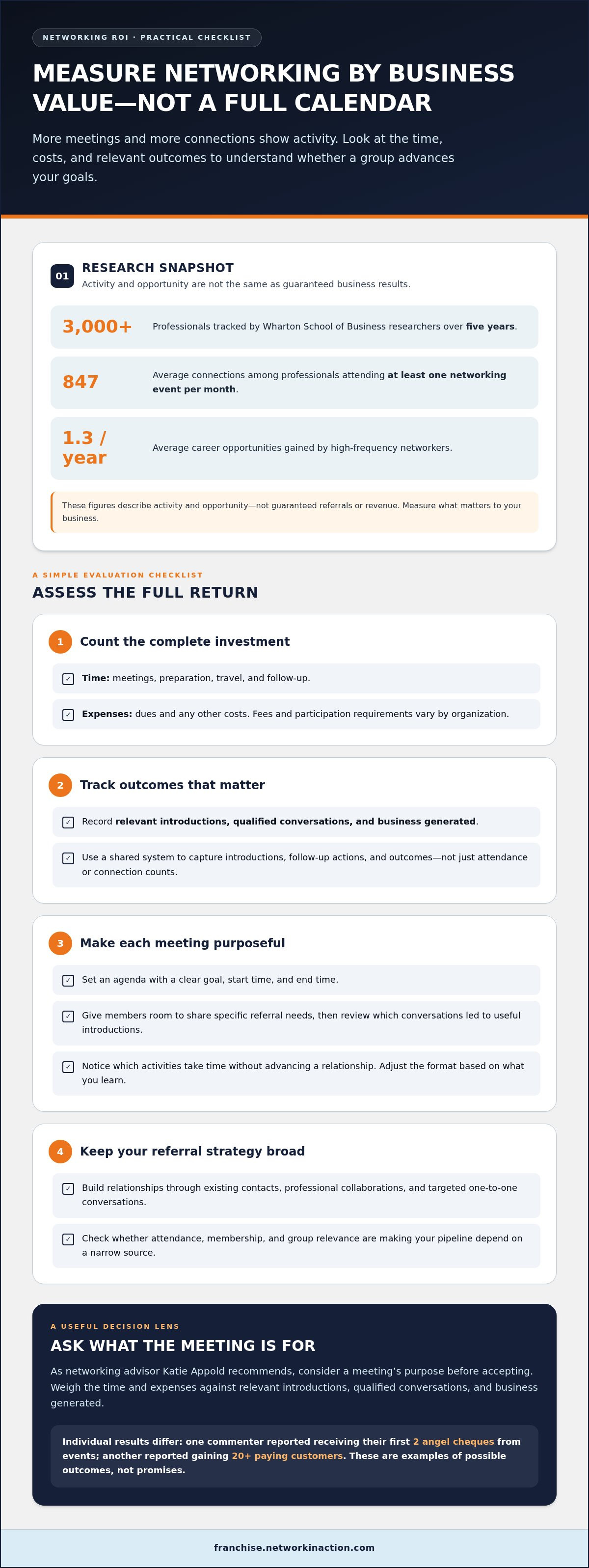
A full calendar isn’t proof of business value. Researchers at the Wharton School of Business tracked more than 3,000 professionals over five years. Professionals attending at least one networking event per month averaged 847 connections, while high-frequency networkers gained 1.3 career opportunities per year on average. Those figures describe activity and opportunity, not guaranteed referrals or revenue. Measure what matters to your business.
Weekly networking organizations set their own fees and participation expectations. Assess the full time commitment, including meetings, preparation, travel, and follow-up, alongside any dues or other expenses. Compare those inputs with relevant introductions, qualified conversations, and business generated. A high connection count can make an active group look valuable without showing whether it advances your goals.
Improve the return by making each meeting purposeful and trackable. Set an agenda with a clear goal and start and end times. Give members room to share specific referral needs, then record introductions, follow-up actions, and outcomes in a shared system. Review the results regularly: which conversations led to useful introductions, and which activities took time without advancing a relationship? Adjust the format based on what you learn.
Relying on one weekly group can limit your access to industries, perspectives, and potential partners. If attendance falls or few members are relevant to your work, your pipeline may depend on a narrow source. Diversify your referral strategy through existing contacts, professional collaborations, and targeted one-to-one conversations. Then changes to one group’s agenda or membership will not shape every opportunity.
Costs and participation requirements vary by organization. Consider dues and other expenses, as well as the time needed for meetings, preparation, travel, and follow-up.
Katie Appold advises judging networking by its return on investment and recommends asking what a meeting is for before deciding whether to accept it. Individual outcomes can differ: one commenter received their first 2 angel cheques from events, while another gained 20+ paying customers. These examples show possible business value, not a promise that every event will produce the same results. Senior contacts should not be expected to lead directly to job interviews. The reader reported that only one conversation directly covered openings at an organization; the others were generally networking or informational interviews, which can serve different goals.
3. Developing a trusted, intentional professional circle
A strong professional circle depends on relevance, trust, and mutual contribution, not the size of your contact list. Identify people who understand your customers, complement your expertise, or offer insight into your market. Then invest in those relationships deliberately. A trusted accountant, strategic partner, and candid peer can each help you spot different opportunities and make stronger introductions.
Alternatives to weekly networking meetings include one-to-one conversations, collaborative projects, and small gatherings centered on shared business interests. Introductions through existing contacts can connect you with relevant people, though they may be harder to access when your network is small. An intimate dinner, for example, can give founders time to discuss practical challenges and identify potential customers or partners.
Make each conversation useful. Ask open-ended questions about the other person’s priorities, listen for a specific challenge, and offer a relevant idea or introduction when you can. Do not treat every exchange as a pitch. If you learn that a contact is expanding into a new market, follow up with a useful connection rather than a generic sales message.
Keep your circle active with intentional contact. Speak with core network contacts monthly, and give each conversation a reason: share an update, ask about a goal, or explore a collaboration. Friends can become trusted professional allies, but familiarity alone doesn’t establish business fit. Pay attention to reliability, judgment, and whether both people contribute value over time.
Review the circle you are building. List the people who understand your work, the relationships that create useful introductions, and the gaps in expertise or market access. Then reconnect with one person and develop one new relationship through a shared project or thoughtful introduction. This turns networking from a recurring appointment into a deliberate way to build credibility, collaboration, and referrals.
4. Social groups versus business networking groups
A social group builds belonging around shared interests; a business group should also offer a clear path to professional value. This distinction matters when you assess whether a meeting supports your career goals. A founders’ dinner may encourage candid conversation and lasting friendships, while a referral group needs a business purpose, relevant expertise, and a way to recognize useful introductions.
Social connection can strengthen professional trust, but it does not automatically produce qualified leads. At a casual gathering, people may talk about hobbies, family, or industry news without discussing whom they serve. A business-focused group can make room for personal connection while directing attention to expertise, customer needs, collaboration, and referral opportunities.
Look at how a group is designed before committing your time. Consider what members are expected to contribute, whether introductions reflect genuine fit, and how the group helps people stay connected between meetings. A monthly founders’ gathering, for example, could offer peer support, while a structured professional group may better suit someone seeking consistent referral relationships.
Watch for a mismatch between the group’s promise and its actual conversations. If meetings focus mostly on socializing, do not judge them solely by immediate leads; consider whether they build useful peer relationships or market insight. If the stated goal is business referrals, look for specific discussion of ideal customers, complementary expertise, and timely introductions. The group’s purpose should justify the time you invest.
Choose a group based on the outcome you need now. For community, shared experience, and candid peer support, a social group may be the right fit. For business development, prioritize a group with a defined professional purpose and meaningful ways to build credibility. Before joining, write down the result you want, then use it to assess the agenda, member mix, and follow-through.
Katie Appold says several people she met through networking meetings became go-to referrals for her business, Nonprofit Nav. One respondent recommends building genuine professional connections rather than simply exchanging business cards.
The page claims frequent event-goers spend six times more hours and gain 38% fewer opportunities than the comparison group.
Network In Action: Franchise a business opportunity
Network In Action offers a franchise opportunity for professionals who want to lead local business referral groups. Its model brings together industry-exclusive groups, with one professional per industry, and does not require forced referrals. That gives relationships room to develop around genuine fit.
Network In Action uses monthly meetings and a technology platform to help members stay connected between gatherings. Franchisees receive comprehensive training and ongoing support to build and manage groups. The opportunity may suit entrepreneurs who want to lead a professional community and grow a business.
If leading a local business community aligns with your goals, explore the Network In Action franchise kit to learn more about the opportunity.
Choose the Kind of Network You Want to Build
Understanding why weekly networking meetings don't work can point to a bigger opportunity: shaping a professional community around how people build trust and create value. If you enjoy bringing business owners together, leading a local networking group may be a better next step than attending another meeting. It lets you put purposeful networking into practice.
Network In Action’s franchise opportunity may suit professionals interested in leading local business communities. Consider whether this direction fits your strengths, ambitions, and preferred way of working. Start with what you want to contribute, not pressure to follow someone else’s model. Your experience and leadership can help create a more intentional space for professional relationships to grow.
Explore the possibility at your own pace, then contact Network In Action to discuss whether it aligns with your goals. A thoughtful next move can turn your perspective on networking into meaningful community leadership.
Frequently Asked Questions
What am I doing wrong?
You may not be doing anything wrong; the group’s format may simply not match your business goals. Before your next meeting, define the connection that would help, such as a referral partner who serves the same clients. Explain your expertise clearly and ask a focused question. Afterward, assess whether the group created a useful next step, not just another appointment.
How many networking meetings per month are optimal for building business relationships?
No monthly meeting frequency guarantees stronger relationships. One commenter found one event a month worked well, while another reported diminishing returns beyond two events a month.