
More meetings don’t automatically create stronger relationships. Weekly networking can add pressure to an already crowded calendar without giving every conversation a clear purpose. That’s why a monthly meeting model is better for networking groups when focused gatherings are supported by meaningful engagement between meetings.
You already know consistency matters. Trust grows through repeated, genuine interactions, not simply by showing up more often. The right question isn’t whether members meet less; it’s whether each meeting and follow-up creates more value for the time invested.
This article explores the trade-offs between monthly and weekly networking, including how a lower meeting frequency can protect your workday without weakening professional connections. You’ll see how clear agendas, intentional follow-up, and digital tools help keep conversations moving between gatherings. Network In Action brings these elements together through monthly agendas, a technology platform, a smartphone app, CRM, and automated member engagement. Its industry-exclusive groups welcome one professional from each industry, without requiring forced referrals. The result is networking built around quality, structure, and momentum, not a crowded calendar.
Key Takeaways
- Understand why a monthly meeting model is better for networking groups when focused sessions are paired with purposeful follow-up between meetings.
- Use a clear prepare, meet, connect, follow up, and report-back cycle to keep relationships active and referrals moving.
- Compare monthly and weekly meeting cadences against your group’s need for live interaction, calendar efficiency, and ongoing coordination.
- Make each gathering count with a defined purpose, prepared members, a focused agenda, and specific next steps.
- See how industry-exclusive groups and no forced referrals can support relevant, relationship-driven networking.
Why a Monthly Meeting Model Can Work Better for Networking Groups
Understanding why a monthly meeting model is better for networking groups starts with an important distinction: fewer gatherings don’t automatically create stronger connections. The model works when a focused meeting gives members time to build trust and make relevant introductions, while purposeful contact between sessions keeps those relationships active. Without that structure, a monthly calendar can simply mean fewer opportunities to connect.
Networking isn’t a contest to collect contacts or fill attendance sheets. Its value comes from people learning what others do, understanding who they can help, and developing enough confidence to make thoughtful introductions. A useful referral depends on context and trust, not just proximity at a meeting. Members need a clear reason to attend and a practical way to contribute beyond the room.
What makes a networking meeting valuable?
Business networking takes different forms, but its purpose is to create professional connections that can support mutual opportunity. A quick exchange of business cards may start a conversation, but it doesn’t establish what a person needs, who they serve, or whether an introduction would be relevant. A purposeful meeting makes room for members to share useful context, listen closely, and take part in conversations that can develop into trusted relationships.
A clear agenda helps members decide how to invest their time. They can arrive prepared to discuss a specific need, offer expertise, or connect two professionals whose work may complement each other. For a grounding in the concept of business networking, consider how connection and mutual professional benefit sit at its core. Attendance matters, but participation gives it meaning.
Why weekly meetings can feel like a poor fit
For busy professionals, a recurring appointment carries an opportunity cost: time in the meeting is time unavailable for client work, team priorities, or business development. If each session repeats the same format without creating fresh conversation or clear next steps, showing up can start to feel routine rather than useful. That’s a design problem, not proof that every weekly group is ineffective.
Weekly meetings can suit groups that rely on frequent live interaction, rapid coordination, or regular opportunities to share updates. The right cadence depends on what members need to accomplish together. A monthly rhythm may fit better when members can stay connected and follow through between gatherings, rather than relying on another meeting to restart every conversation.
The key qualification is engagement. A monthly cadence works best when members know why they’re meeting, come ready to contribute, and have clear reasons to stay in touch afterward. Before setting the schedule, ask:
- What should members leave the meeting knowing or ready to do?
- How will relevant introductions and follow-up happen between sessions?
- What will help members see progress when the group meets again?
When those answers are clear, the meeting becomes an anchor for ongoing relationship-building, not the only place it happens. If they’re missing, meeting less often won’t solve the underlying problem. The goal isn’t simply to protect calendar space. It’s to make every gathering and connection earn its place in a professional’s working week.
How Monthly Networking Meetings Keep Relationships and Referrals Moving
A monthly meeting should be the anchor of a member experience, not its only point of contact. The gathering creates space for focused conversation, while preparation and follow-through keep relationships active between sessions. That’s the practical answer to why a monthly meeting model is better for networking groups: the cadence saves recurring calendar time only when relationship-building continues beyond the meeting.
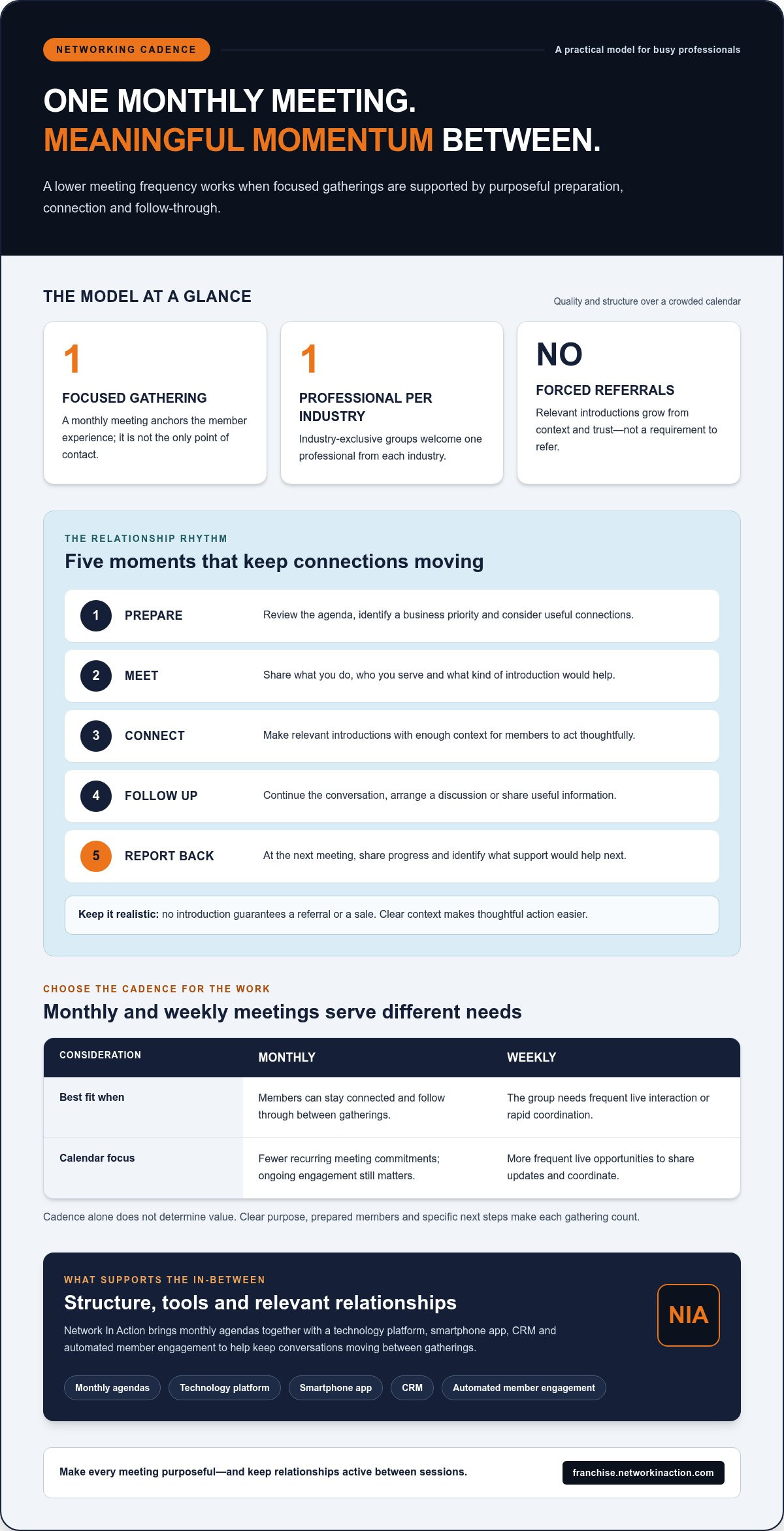
Effective monthly networking pairs one purposeful meeting with consistent follow-through between gatherings. Members need a predictable structure that respects their schedules and makes the time together count. A shared agenda can clarify what to prepare, give each conversation a reason to happen, and leave room for relevant introductions instead of letting the session drift into routine updates.
What happens before and after the monthly meeting?
Before the gathering, members can review the agenda, identify a business priority, and consider which connections would be useful. If a member is seeking a professional with particular expertise, sharing that need ahead of time gives others a chance to think of a relevant introduction. Preparation helps shift the meeting from general updates to specific, useful exchange.
During the meeting, members can explain what they do, who they serve, and what kind of introduction would be valuable. Afterward, a timely follow-up might mean sending a personal introduction, arranging a conversation, or sharing information that helps a member make a decision. The next meeting then offers a natural point to share progress and identify what support would help next. No introduction guarantees a referral or a sale, but clear context makes it easier for members to act thoughtfully.
How technology can bridge the weeks between meetings
A smartphone app and CRM can help members keep professional details and connections organized, while automated member engagement can prompt continued interaction without adding another scheduled meeting. The goal isn’t more digital noise. It’s making useful context easier to find and giving members a practical way to stay connected when an opportunity to help arises.
For example, after meeting a member whose clients may need a complementary service, you can record the connection and follow up when a relevant introduction comes to mind. That turns networking into a repeatable practice: prepare, meet, connect, follow up, and return with progress. Members can also explore how consistent relationship-building supports a modern networking business model.
A clear system matters because a referral is not simply a name passed along. It depends on understanding the need, knowing the people involved, and making an introduction with care. For a closer look at planning relationship-led growth, explore a referral marketing strategy that gives follow-up a defined role. The right cadence creates the opportunity to connect; member participation and consistent follow-through give those connections room to develop.
Monthly vs. Weekly Networking Groups: Which Cadence Fits the Job?
The right meeting schedule depends on what members need from the group, how quickly they need to coordinate, and whether they can maintain useful contact between gatherings. A weekly cadence can create more occasions for live interaction. A monthly cadence can concentrate attention into a planned session, with follow-through carrying conversations forward. Neither schedule guarantees stronger relationships; purpose and execution determine the value.
| Factor | Weekly meetings | Monthly meetings |
|---|---|---|
| Calendar commitment | More frequent recurring appointments; members need to protect time each week. | Fewer scheduled gatherings; members need to use the space between meetings intentionally. |
| Relationship continuity | Frequent in-person contact can help members stay connected. | Connection depends on purposeful follow-up and member contact between sessions. |
| Agenda depth | Shorter updates may suit a regular rhythm, provided each session has fresh value. | A focused agenda can give members room to work through priorities and make relevant introductions. |
| Follow-up needs | Live contact is more frequent, but action items still need ownership. | Clear next steps are essential to keep introductions and conversations moving until the next gathering. |
When could weekly networking be the better fit?
Weekly meetings may suit groups whose members need frequent live coordination, immediate peer input, or regular discussion of fast-moving work. The cadence can make it easier to reconnect often, but each session still needs a distinct purpose. A fresh agenda, useful participation, and clear next steps prevent frequent meetings from becoming repetitive. More face time alone doesn’t create trust or guarantee stronger referral relationships.
When does monthly networking make more sense?
A monthly schedule may fit professionals with demanding calendars who can maintain contact between gatherings. It works best when the group has a defined purpose, members know what to prepare, and follow-up is part of participation rather than an afterthought. This is one reason why a monthly meeting model is better for networking groups that value concentrated sessions and consistent digital contact, not a universal rule for every group.
Use these questions to match cadence to the group’s actual operating rhythm:
- Does the group need frequent live coordination, or can members handle routine contact between sessions?
- Can each scheduled meeting offer a clear purpose and new value?
- Will members follow up on introductions and actions before they meet again?
- Do members share the same expectations about attendance, preparation, and participation?
If weekly gatherings are necessary for timely coordination and members can bring fresh value each time, that schedule may be the stronger fit. If the group’s purpose is relationship-building and members can stay engaged between focused sessions, monthly may better protect calendar capacity while preserving continuity. Choose the cadence members can sustain, then make the expectations explicit. The measure isn’t how often the group meets. It’s whether the rhythm supports relevant conversations, reliable follow-through, and professional relationships that continue to develop.
How to Make a Monthly Networking Meeting Worth Attending
A productive monthly networking meeting doesn’t happen by accident. It needs a clear purpose, prepared members, a focused agenda, and follow-up that turns discussion into action. That structure helps members use their time well and gives the group a practical way to assess whether its meetings are serving their goals.
A productive monthly networking meeting combines a clear purpose, balanced participation, relevant introductions, and accountable follow-through. Put the system in place before the next gathering:
- Set the purpose. Define what members should accomplish together, such as understanding each other’s current business priorities or identifying useful connections.
- Prepare members. Share the agenda in advance and invite members to bring a specific update, request, or insight that fits the group’s purpose.
- Run a focused session. Use a facilitator to guide transitions, make room for different voices, and keep discussion tied to the agenda.
- Assign follow-up. Capture agreed actions and introductions, identify who will take each next step, and revisit progress at the next meeting.
Industry exclusivity can add useful range to the room. With one professional from each industry, members can hear perspectives from different fields while knowing who represents each profession in the group. That structure can help members recognize relevant connections, but it doesn’t promise a certain number of referrals. Relevance and trust still depend on how members learn about one another and follow through.
What should a focused networking agenda include?
Build the agenda around the group’s purpose, not around filling time. Give members room to share concise business updates, name a specific connection they’re seeking, and make introductions when there’s a clear fit. Set expectations for speaking time and transitions so one or two voices don’t dominate. A facilitator can invite quieter members into the conversation and redirect discussion when it drifts from member needs.
How should members maintain accountability between meetings?
Before the meeting ends, members can record commitments, introductions to make, and information they agreed to share. Follow up promptly, then use agreed digital touchpoints to keep the group informed without adding another scheduled gathering. At the next session, review what was completed, what remains open, and what support would be useful. This creates accountability without treating referrals as quotas.
Measure the meeting by more than attendance. Ask members whether the agenda addressed relevant priorities, whether participation felt balanced, and whether agreed actions were completed. Their feedback can guide the next agenda and highlight where the group needs clearer expectations. If members regularly leave without useful connections or next steps, adjust the format rather than assuming that simply meeting more often will fix it.
For leaders who want to build a business around structured networking communities, explore the Network In Action franchise opportunity and learn how its model supports group leadership.
How Network In Action Puts the Monthly Networking Model to Work
Network In Action applies the monthly model through industry-exclusive groups designed to support professional relationships, not attendance for its own sake. Members can build familiarity with peers across different fields and look for ways to be helpful. Referrals aren’t forced; introductions can follow genuine relevance and trust rather than a requirement to pass business.
This approach gives the monthly gathering a clear role within a broader member experience. The value isn’t measured by how many referrals a group produces, but by the quality of its participation and the strength of the connections members choose to develop. Network In Action offers a modern alternative to rigid, transactional networking practices.
What supports the Network In Action member experience?
Network In Action supports its groups with a technology platform that includes a smartphone app, CRM, automated member engagement, and monthly agendas. Members can also access NEST, an e-learning and resource platform available 24/7. Together, these tools give professionals ways to stay informed and engaged between gatherings without adding another scheduled meeting. Members remain responsible for deciding when a connection is useful and following through with care. The focus stays on professional credibility and relationship-driven growth.
How can a reader explore leading a networking group?
For entrepreneurs interested in building local business communities, the Network In Action franchise offers a path to lead groups of professionals using this model. Franchisees receive a 40-hour comprehensive training program from corporate staff, plus ongoing support. Community leadership calls for more than organizing a calendar: it means creating a purposeful environment where members can contribute, develop trust, and find opportunities to help one another.
If leading a professional community aligns with your strengths and ambitions, explore how the franchise model could fit your next chapter. The downloadable Franchise Kit provides a starting point for understanding the opportunity and considering whether Network In Action is the right platform for your goals.
Build a More Intentional Networking Community
The next step is to decide what kind of professional community you want to lead and what role you want that business to play in your life. Network In Action’s subscription-based franchise model creates the potential for recurring revenue. As with any business, results depend on how you build and lead your groups, so consider how the opportunity fits your priorities and ambitions.
That opportunity calls for a strategic choice. Consider whether leading local business groups aligns with your strengths and your vision for meaningful impact. Network In Action gives franchise owners a structured model for building professional communities through business relationships.
Explore the opportunity at your own pace. Review how the franchise model works and what kind of leadership it calls for. Explore the Network In Action franchise model and take a thoughtful next step toward building a business on your terms.
Frequently Asked Questions
Is a monthly meeting schedule enough to build strong networking relationships?
Yes, if members keep building familiarity beyond the scheduled gathering. Strong relationships develop as people learn each other’s expertise, priorities, and working styles over time. A practical habit is to note what a contact is focused on, then reconnect when you have a relevant insight or introduction to offer. The reason why a monthly meeting model is better for networking groups is not the lower frequency alone; members need meaningful reasons to stay engaged.
Can monthly networking meetings generate referrals as effectively as weekly meetings?
They can support valuable referrals, but the schedule itself doesn’t determine referral quality. Members need enough context to recognize a good fit and confidence that an introduction will be handled professionally. For example, a brief follow-up conversation can clarify what a member’s ideal client looks like before making an introduction. Weekly meetings may create more chances to talk in person, but each conversation still needs to build useful understanding.
How do members stay connected between monthly networking meetings?
Members can stay connected by making follow-up specific and personal. After an introduction, send a short note explaining why the connection may be relevant, then give both people room to decide whether to continue the conversation. A shared digital platform can help members find contact details or keep track of commitments. Keep online touchpoints useful and purposeful, rather than recreating another full meeting through a stream of general updates.
What should a monthly business networking meeting include?
A useful agenda should help members understand one another’s current priorities and identify where their expertise may be relevant. Alongside concise updates, consider a short discussion of a shared business challenge or a member’s specific request for insight. Close by confirming any agreed next steps and who will take them. This gives the session a clear outcome without extending the agenda with material that doesn’t serve the group.
How can a networking group tell whether monthly meetings are working?
Look for evidence that members are contributing, acting on commitments, and finding the conversations relevant. After a meeting, invite focused feedback: Which discussion was most useful? What should change next time? A leader can also review whether introductions led to follow-up conversations, without treating every introduction as a sale or referral target. Use those observations to adjust the agenda, participation format, or communication habits for the next cycle.
Are monthly networking meetings suitable for every business group?
No. A group coordinating urgent work or relying on frequent peer input may benefit from meeting more often. A group focused on professional introductions may find a monthly gathering effective if members can maintain contact in between. Before choosing a schedule, identify what members need from one another, how quickly they need to respond, and what kind of interaction they can realistically sustain. Match the rhythm to the work, not to habit.
Does meeting monthly mean networking members have less accountability?
No. Accountability comes from clear ownership of actions, not from the number of calendar invitations. At the end of a session, members can record who will make an introduction, share a resource, or follow up on a conversation. At the next gathering, they can report what happened and identify any useful next move. This makes commitments visible while giving members room to handle follow-through in the way that suits the situation.