A new franchise doesn’t need a louder marketing plan. It needs a sharper one. A marketing plan for a new franchise owner should turn local credibility into qualified conversations, not scatter time across channels that don’t support clear business goals.
Building awareness takes more than repeating a national brand message. Your challenge is to make that message relevant locally, choose activities worth your attention, and turn professional conversations into measurable progress. A focused plan gives each effort a purpose while keeping your local presence consistent with the franchise brand.
This guide shows you how to set priorities, build trust with local professionals, and track meaningful signs of growth. You’ll also see how Network In Action’s monthly meetings, industry-exclusive groups, and technology platform can support a local message that attracts suitable professionals. The result is a practical framework for connecting marketing activity to business goals without relying on cold prospecting or outdated networking habits.
Key Takeaways
- A focused marketing plan for a new franchise owner starts with a clear local audience, relevant message, and measures tied to business goals.
- Research local professionals’ needs before choosing how to position and promote a networking community.
- Compare relationship-building, local content, social channels, and direct outreach by fit, effort, consistency, and response.
- Use a repeatable cycle to schedule activity, record conversations, review patterns, and refine priorities.
- Align Network In Action’s monthly meetings, industry exclusivity, and technology platform with a local message that attracts suitable professionals.
Why a Marketing Plan for a New Franchise Owner Must Start Locally
A franchise brand gives you a recognizable framework, but local trust depends on how you use it. Start by understanding the professionals and businesses in your territory. Then choose practical ways to become known, learn what matters to them, and build relationships.
A franchise marketing plan is a local operating map for reaching the right audience, communicating the brand’s value, and measuring progress toward a business objective. Unlike a general business plan, which covers the broader operation, this plan guides marketing decisions: goals, audience, messages, channels, responsibilities, and measures. Understanding the Marketing Plan provides broader context for these components, but your plan needs to translate them into action in your local market.
For a networking franchise, the offer is a professional community, not a conventional retail product. You’re building awareness and attracting suitable local members. The key question is not simply how to sell more, but how to help the right professionals understand the value of connecting through your group. Make that distinction clear from the start.
What does a franchise marketing plan help a new owner do?
A plan connects each activity to a local business objective. Instead of posting, attending events, and sending messages without a shared direction, prioritize actions and decide what each should accomplish. That focus matters when you’re building awareness and relationships at the same time.
For every activity, identify the intended audience and the response that would signal genuine interest. For example, an introduction to a local business owner could invite a conversation about the professional connections they value, rather than push for an immediate commitment. Record the next step and who is responsible for following up. Without that, it’s difficult to build on the conversation or learn from it.
Why does a networking franchise need a relationship-led approach?
Professional credibility grows through consistent, relevant interactions. Trust gives people a reason to make meaningful introductions, while a transactional pitch can make an interaction feel like a request for an immediate return. Lead with curiosity about local businesses and the value professionals can create for one another. The objective is not to collect contacts. It’s to establish relationships worth developing.
A strong local community also needs a thoughtful mix of industries. Consider which professionals serve the same business owners in complementary ways and what expertise would make the group more useful. Industry exclusivity makes that balance especially important: your outreach should attract capable professionals whose expertise adds distinct value, not simply maximize inquiries.
Keep the brand-wide message consistent, then make the local proof specific. The brand defines the community’s core promise. You bring it to life through local conversations, relationships, and examples that reflect your territory. That balance gives your marketing plan direction and your community a credible local presence.
Build the Marketing Plan Around Your Local Audience and Value
A defined audience makes every marketing choice more focused, from the words you use to the conversations you prioritize. For a networking franchise, that audience includes local business owners and professionals who value credible connections and want to build relationships across industries. A marketing plan for a new franchise owner should turn that understanding into a clear sequence of actions, not a collection of assumptions.
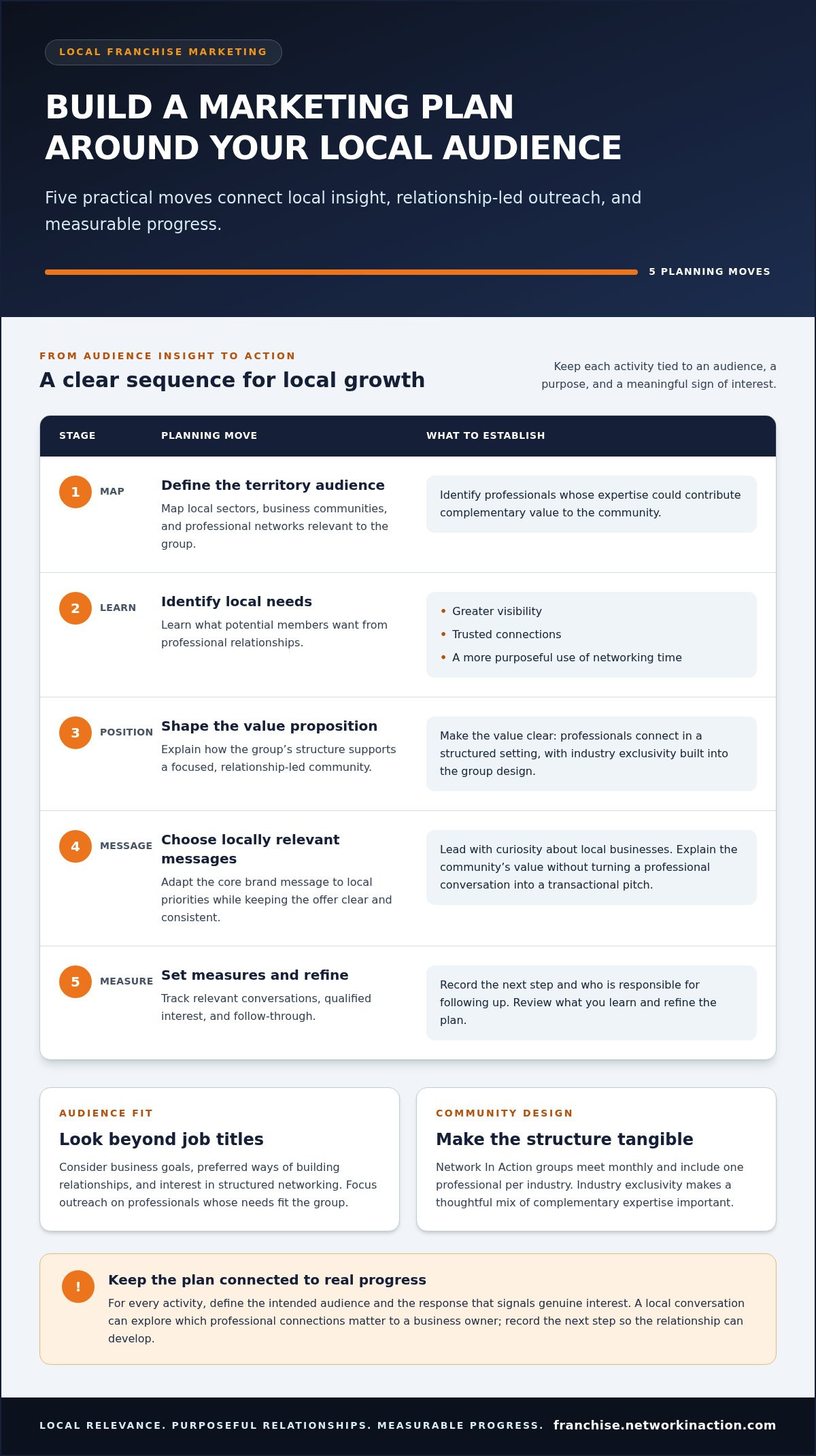
Use this sequence to build the plan:
- Define the territory audience. Map the local sectors, business communities, and professional networks relevant to your group.
- Identify needs. Learn what potential members want from professional relationships, such as greater visibility, trusted connections, or a more purposeful use of networking time.
- Shape positioning. Explain how the group’s structure supports a focused, relationship-led community.
- Choose messages. Adapt the core brand message to local priorities while keeping the group’s offer clear and consistent.
- Set measures. Track relevant conversations, qualified interest, and follow-through, then use what you learn to refine the plan.
How should a new owner define the local audience?
Start with a practical territory map. Note the business sectors and professional communities operating locally, then consider which would contribute complementary expertise. Look beyond job titles: a business owner’s goals, preferred way of building relationships, and interest in structured networking can help you assess whether the group’s approach fits.
Separate likely-fit professionals from people outside the group’s focus. This isn’t about dismissing prospects; it’s about using your time well and keeping outreach relevant. A carefully defined audience helps you choose where to build awareness and which conversations deserve follow-up.
How can the message explain a networking group’s value?
Lead with what the structure offers. Network In Action groups meet monthly and include one professional per industry. NIA’s industry-exclusive groups also offer a guaranteed ROI on every membership. These features give you a clear way to explain the community: professionals connect in a structured setting, with exclusivity built into the group design.
Use plain language. Explain that relationship-driven growth comes from building professional credibility and making meaningful introductions over time, not treating each interaction as a transaction. Keep the message grounded in quality connections and a purposeful use of time. Avoid broad claims such as “grow your business fast.” Describe the community clearly so local professionals can decide whether its approach fits their goals.
As you refine your territory audience, use available franchise territories to explore how local market focus connects to the franchise opportunity.
Compare Marketing Channels by Fit, Effort, and Relationship Quality
The best channel isn’t automatically the one with the widest reach. For a professional community, a channel is useful when it puts you in front of relevant people and creates a natural path to a meaningful conversation. A strong marketing plan for a new franchise owner balances awareness-building with the relationship work that turns recognition into trust.
Use this comparison to choose channels based on fit and capacity, not habit. Effort is relative, and consistency matters more than trying to be everywhere.
| Channel | Audience fit | Effort and consistency | Useful response measures |
|---|---|---|---|
| Relationship-building, local professional associations, business communities, and relevant in-person opportunities | Strong when local business owners and professionals already gather there | Requires personal participation and thoughtful follow-up; choose opportunities you can attend consistently | Relevant conversations, introductions, and follow-up discussions |
| Local content, useful perspectives on professional connection and community leadership | Best for people seeking expertise or learning about local business issues | Requires planning and a steady publishing rhythm; reuse core brand language | Inquiries, direct responses, and conversations prompted by the content |
| Social channels, updates that explain the group’s purpose and highlight professional ideas | Depends on where local professionals are active and willing to engage | Requires regular, clear updates and responsive interaction | Substantive comments, messages, and invitations to discuss the group |
| Direct outreach, personal invitations to relevant professionals | Strong when the recipient fits the group’s professional focus | Requires individual research, personalization, and respectful follow-through | Replies, accepted conversations, and agreed next steps |
Which channels can support local professional visibility?
Start where your intended audience already invests attention. A local business association may create opportunities to meet professionals face to face, while social content can introduce the group’s purpose before a direct conversation. Give each channel a clear role: content and social activity can build awareness, while personal interaction lets people assess your credibility and explore a relationship.
Make direct outreach feel like an invitation, not a demand. Refer to a person’s professional context, explain why a conversation may be relevant, and leave room for them to decide. Pressure might prompt a quick response, but it doesn’t establish the foundation for a professional community.
How can owners balance personal outreach with digital activity?
Match your channel choices to local habits and the time you can sustain. Keep essential group information and brand language aligned across in-person conversations, content, social profiles, and outreach. Then evaluate responses that show genuine interest, not reach alone. A smaller number of relevant conversations can offer more useful direction than broad exposure without follow-through.
Choose a manageable mix, assign time to each activity, and review what it produces. If a channel creates visibility but few qualified conversations, adjust the message or audience before adding more activity. Focused execution beats scattered promotion.
Turn the Strategy Into a Repeatable Marketing Plan
A marketing plan earns its place when it guides action and helps you learn. Keep the operating rhythm simple: set a local goal, schedule a few actions, record responses, review patterns, and refine. This cycle gives you structure without locking you into a rigid campaign that ignores what’s happening in your territory.
What should the first version of the plan contain?
Start with one specific objective and the audience it serves. For example, you might aim to create more conversations with local professionals in industries that would complement the community. Then select a small number of repeatable actions across relationship-building and digital channels. Assign an owner to each task, choose a schedule you can sustain, and decide when to review the results.
A useful plan makes responsibilities clear. “Post on social media” is vague. “Share a helpful perspective for local professionals and note the responses” gives the activity a purpose and a way to learn from it. Keep the first version manageable. Expand it after you understand which actions generate relevant engagement.
Use a simple table to turn the objective into work you can track. This example is a starting point, not a required schedule:
| Action | Audience | Timing | Owner | Measure |
|---|---|---|---|---|
| Attend a relevant local professional gathering | Business owners and professionals aligned with the community | Planned recurring opportunity | Franchise owner | Relevant conversations and agreed follow-ups |
| Publish a useful post explaining the group’s purpose | Local professionals who engage with business content | Scheduled publishing slot | Franchise owner | Substantive replies or direct inquiries |
| Follow up with professionals who express interest | People who fit the group’s professional focus | After a meaningful interaction | Franchise owner | Responses and next steps recorded |
How should a franchise owner review marketing performance?
Record the essentials consistently: who you spoke with, how they responded, whether they fit the intended audience, and what next step you agreed on. Then compare activity with your objective. A post’s reach may show awareness, but it doesn’t tell you whether qualified interest or meaningful conversations followed.
Separate activity measures from business outcomes. Attendance, posts, and outreach attempts show what you did. Replies, qualified interest, and follow-through show how people responded. Neither category alone proves that a specific action caused a business result. Look for patterns, keep your interpretation measured, and adjust one element at a time, such as the audience or message. That makes the next review more useful.
For a closer look at the business opportunity behind this structured approach, explore the Network In Action franchise opportunity.
Apply the Plan to a Network In Action Franchise
For a Network In Action franchise, your marketing plan should show local professionals what makes the community relevant to their working lives. Connect your outreach to the relationships they want to build, the expertise they bring, and the professional environment they value. Then use responses to learn which parts of that message resonate locally. The goal is a credible introduction to the franchise, not an unsupported promise about specific business outcomes.
How does NIA’s model shape local marketing priorities?
Center local communication on curated professional participation and relationship-driven growth. Explain how the group creates a setting for professionals to build trust and make meaningful connections. NIA’s monthly meetings and one-professional-per-industry structure distinguish the model from traditional weekly networking. For additional context on trust-based growth, explore this referral marketing strategy guide. The business networking franchise guide provides further context on the ownership model behind this local leadership role.
What resources support a new owner's execution?
NIA provides a comprehensive 40-hour training program, which prepares franchisees as networking experts, plus ongoing support from corporate staff. NEST, the e-learning and resource platform, is available 24/7. Use these resources to build your understanding of the framework, then bring your local perspective to how you introduce the opportunity and build professional credibility.
The technology platform includes a smartphone app, CRM system, member engagement automation, and monthly agendas. These tools support the operating model, while your local marketing creates opportunities for professionals to learn about it. Keep a clear record of meaningful interactions and use what you learn to sharpen your communication.
Ready to explore whether this ownership model aligns with your goals? Review the downloadable Franchise Kit and explore available franchise territories as practical next steps.
Put Your Local Growth Strategy Into Motion
Treat marketing as an ongoing leadership practice, not a launch task you complete and set aside. As you build your professional community, stay curious about what local business owners value, protect time for meaningful conversations, and make deliberate adjustments as you learn. A clear marketing plan for a new franchise owner gives that work direction while leaving room to respond to your market.
The opportunity is bigger than promotion. It’s a chance to shape a credible local community and build a business around meaningful professional relationships. Explore whether the model fits your goals, strengths, and preferred way of leading.
Explore the Network In Action franchise opportunity and take a thoughtful next step toward building your professional community.
Frequently Asked Questions
How often should a new franchise owner update a marketing plan?
Review your plan in line with campaign activity and business priorities, rather than following a universal schedule. At regular intervals, compare recorded responses with your goals and note changes in local audience behavior. If a message stops prompting relevant conversations, adjust that element first. Routine changes, such as refining a post or invitation, don’t require a full strategy reset. Revisit the broader direction when your audience, territory priorities, or business objectives shift.
What should a new franchise owner post on LinkedIn?
Share useful observations that help local professionals recognize your expertise and understand the group’s purpose. For example, explain a practical lesson about building trusted business relationships, then ask a thoughtful question that invites professional perspectives. Keep the language consistent with the franchise’s central message, respond genuinely to comments, and avoid turning every post into a pitch. A relevant conversation is a more useful signal than assuming visibility will produce leads.
Does a franchise owner need a separate website for local marketing?
Not necessarily. The decision depends on the franchise’s brand rules, available digital resources, and local goals. Before creating a separate site, clarify what information local prospects need and where they can find it within the existing brand experience. Any local web presence should use consistent business details and serve a clear purpose, such as explaining the community to local professionals. A website is one possible tool, not a marketing objective by itself.
How can a new franchise owner market with a small local audience?
Start with a clearly defined professional audience and focus on relevant conversations rather than broad exposure. A marketing plan for a new franchise owner can begin with one local business community, thoughtful introductions, and follow-up that reflects each person’s interests. Record which messages lead to useful next steps, then refine your approach. A smaller audience calls for focus and consistency, not assumptions about faster growth or a particular return.
Should a new franchise owner use paid advertising immediately?
Paid promotion is a channel choice, not an automatic first step. First define the audience, message, objective, and measure, then decide whether paid reach fits your priorities and available resources. Advertising may create awareness, while trust develops through relevant interactions over time. Assess whether a campaign reaches the intended people, then track whether it prompts responses that merit follow-up. Don’t assume reach alone indicates business impact.
How can a franchise owner keep local marketing consistent with the brand?
Keep the central value proposition and essential group information consistent, while adapting examples and outreach to local professional interests. Use established brand language and materials where applicable, then choose a format that suits the audience. For Network In Action, describe the group’s structure accurately and connect it to the needs of local professionals. Consistency doesn’t mean identical messaging everywhere; it means each channel communicates the same core idea without overstating what the group offers.