What if a franchise discovery day isn’t a sales pitch, but your chance to evaluate the people and business behind the opportunity? If you’re asking what is a franchisee discovery day, think of it as a two-way evaluation: you learn how the franchise operates, and both sides consider whether the fit makes sense. Look beyond the presentation to assess what ownership could mean for your goals, work style, and lifestyle.
It’s reasonable to want clarity before stepping into the room. The agenda can vary, but a discovery day may include time with leadership, an overview of the business model and training, and an opportunity to ask direct questions. You don’t need to arrive ready to decide. You do need to arrive prepared to compare what you hear with what matters to you.
This guide explains what to expect, how to prepare, and which questions can help you evaluate leadership, the community experience, technology, and ongoing franchisee support. For a relationship-driven opportunity like Network In Action, examine how monthly meetings and a proprietary technology platform support connection, and whether leading a professional community aligns with your ambitions. The goal is a clear-eyed decision, made on your terms.
Key Takeaways
- Understand what is a franchisee discovery day and use it to evaluate mutual fit, not as a substitute for independent research.
- Expect the agenda to vary. Focus on what you learn about the business model, leadership, training, and support.
- Set decision criteria for your goals, operating expectations, technology needs, and interest in community leadership.
- Prepare focused questions and organize your notes so you can separate documented information from impressions.
- After the event, summarize the evidence, follow up on unanswered questions, and assess whether the opportunity fits your priorities.
What Is a Franchisee Discovery Day, and Why Does It Matter?
A franchisee discovery day is a structured opportunity for you and a franchisor to examine the business and assess whether the relationship could be a mutual fit. It moves beyond an introductory conversation: you can ask how the model works, meet people who shape the brand, and consider whether the responsibilities align with your goals.
A discovery day is a working evaluation, not a routine sales call. Use it to test your assumptions, understand what ownership may involve, and identify what still needs research. The event can add context, but it doesn’t replace independent research or careful review of the information available to you. For broader context, Franchising explains the relationship between a franchisor and franchisee.
That distinction matters when you’re assessing a business networking franchise. The opportunity involves more than adopting a brand name. It means leading a professional community and creating the conditions for valuable business relationships to grow. Network In Action’s model centers on monthly group meetings, a proprietary technology platform that supports ongoing connection, and training and support for franchisees. You can explore the franchise information kit as part of understanding the ownership opportunity.
What is the purpose of a franchise discovery day?
The purpose is to make the opportunity more concrete. You can observe how leadership explains the business model, culture, training, and support, then compare those explanations with your priorities. The franchisor may also use the conversation to understand your goals, experience, and readiness to lead a business. The aim is informed evaluation, not pressure to commit on the spot.
Notice both what is explained and what remains unclear. For a relationship-driven model, consider what community leadership asks of you: building credibility, encouraging meaningful connections, and prioritizing relationship quality over sheer volume. A confident presentation can be compelling, but your decision should rest on evidence and personal fit, not the energy in the room alone.
When does discovery day happen in the franchise process?
A discovery day commonly serves as a later-stage research milestone, after you’ve developed an initial understanding of the opportunity. There’s no universal sequence, and each brand’s process can differ. You’ll get more value from the event if you arrive with a working understanding of the model and a clear list of what you still need to learn.
Before attending, write down the factors that will shape your decision: the role you want to play, how you want to build professional relationships, and the kind of support that would help you lead effectively. Then compare those priorities with the opportunity in front of you. Treat discovery day as one important input, not the final verdict. Strong decisions come from examining the model, the people, and your own ambitions together.
What Happens During a Franchisee Discovery Day?
There’s no universal discovery-day agenda, so treat any sample schedule as a guide rather than a promise. The event may include conversations about the business model, leadership, your goals, and the responsibilities involved in ownership. The most useful agenda is the one that helps you connect the opportunity’s claims with the decisions you’ll need to make as an owner.
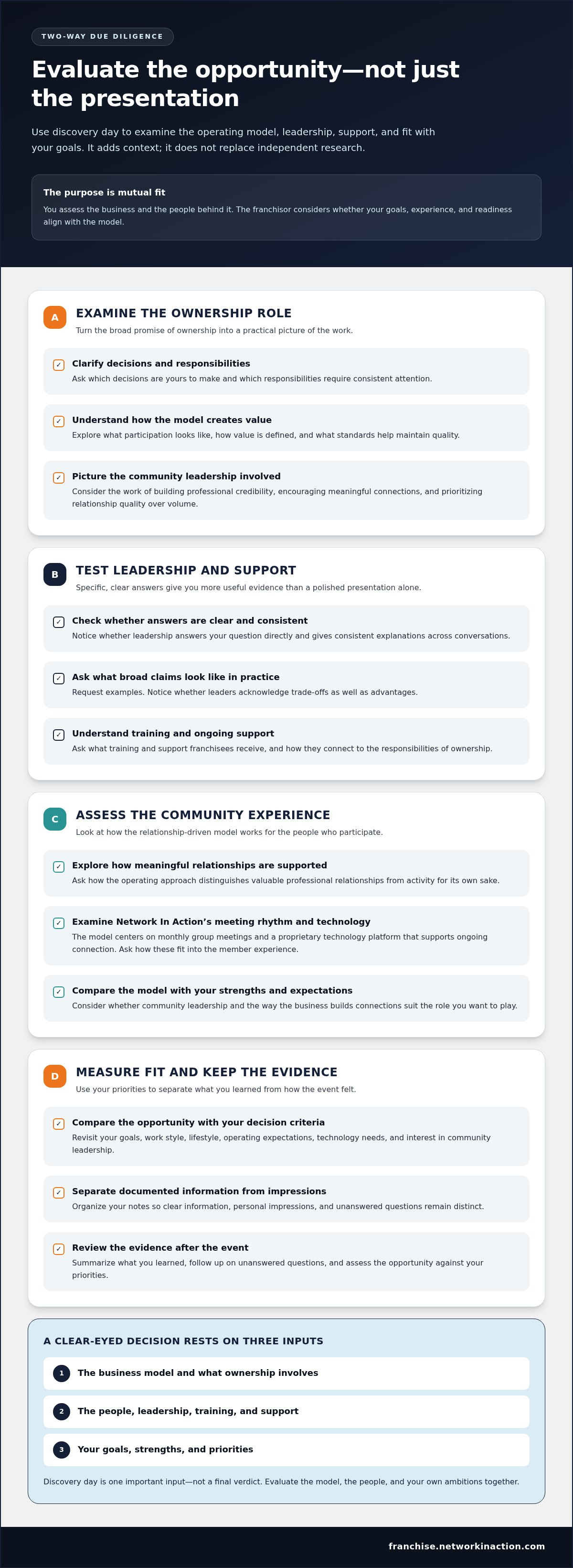
A discovery day is structured two-way due diligence: you examine the opportunity, and the franchisor learns whether your goals and readiness align with the model. Pay attention to how clearly the organization explains its claims and whether the answers help you picture the work behind the opportunity. Use the time to test your understanding, not just absorb a presentation.
Which parts of the franchise model should you examine?
Look beyond the broad promise of business ownership and examine the franchisee’s role. What decisions are yours to make? Which responsibilities require consistent attention? How does the business create value for the people it serves? These questions turn an appealing concept into a practical picture of the work and leadership involved.
Consider the experience from the customer or member’s point of view. Ask what participation looks like, how the brand defines value, and what standards help maintain quality. Explore how the model distinguishes meaningful professional relationships from activity for its own sake. Specific answers can help you assess whether the operating approach matches your expectations and strengths.
What can leadership discussions help you understand?
Leadership conversations can reveal how the organization communicates expectations and responds to detailed questions. Notice whether answers are specific, consistent across conversations, and directly connected to what you asked. If a response relies on broad claims, ask what that looks like in practice. Examples make it easier to distinguish an established operating approach from an aspiration or sales message.
Observe the conversation itself. Do leaders acknowledge trade-offs as well as advantages? Can they explain how your responsibilities connect to the larger business model? A polished presentation may create a strong impression, but clarity under detailed questioning gives you more useful evidence.
Place franchise ownership in the wider executive business opportunity landscape by comparing the leadership role, operating structure, and professional impact you want. Keep the comparison focused on your priorities rather than treating every path as interchangeable.
- Responsibilities: Can you describe what ownership asks of you?
- Value: Is the customer or member experience explained in concrete terms?
- Clarity: Do answers distinguish current practices from future ambitions?
- Alignment: Does the leadership role match the way you want to work?
After the event, compare what you heard with the written materials and flag any differences for follow-up. The franchise information kit can serve as another reference as you assess the model. A clear account of the work, expectations, and value proposition gives you a stronger basis for deciding what to investigate next.
How to Evaluate Franchise Fit Without Feeling Pressured
Enthusiasm can help you see what’s possible, but it can also make a polished presentation feel like proof. Keep those reactions separate. The practical test of what is a franchisee discovery day is whether it gives you evidence to compare with your goals, not whether you leave excited enough to decide immediately.
A simple scorecard keeps the evaluation grounded. For each category, record what you learned, the evidence behind it, and any unanswered questions. You can use a low, medium, or high fit rating, then explain the rating in a sentence. The explanation matters more than the score.
How can you test whether the model fits your goals?
Start with the business and lifestyle you want to build. Consider how much flexibility matters, what leadership role you want, and which long-term priorities ownership should support. Then assess whether the responsibilities described fit those aims. Don’t rate a category highly just because it sounds appealing. Connect your rating to a clear explanation of how the opportunity matches your priorities.
- Personal goals: Does the opportunity align with the flexibility and autonomy you’re seeking?
- Operating expectations: Are the day-to-day responsibilities compatible with how you want to work?
- Community leadership: Would building a local professional community and strengthening members’ relationships energize you?
- Growth approach: Does relationship-driven growth suit your strengths better than cold prospecting?
- Technology and support: Do the platform and franchisee guidance fit the way you want to lead?
For example, someone who enjoys connecting professionals and building credibility may find community leadership motivating. Someone who prefers limited interaction may find the same responsibility draining. Neither reaction is a verdict on the model. It’s useful information about personal fit.
What signals suggest the opportunity deserves further consideration?
Look for clear explanations of franchisee responsibilities, training, ongoing support, and the role of technology. Strong answers address the question asked and explain the operating reality without promising outcomes. Notice whether leadership distinguishes what the model provides from what depends on a franchisee’s actions and local execution.
Separate observations into three categories:
- Verifiable information: Details you can document or compare with official materials.
- Impressions: Your observations about communication, culture, and interaction.
- Assumptions or aspirations: Conclusions that still need evidence, such as expectations about workload or results.
That distinction protects your judgment. A warm conversation may be a positive impression, but it doesn’t answer a question about ongoing support. A compelling description of growth potential is not a guarantee. Mark open questions clearly, identify what evidence would resolve them, and carry them into your next research step.
You don’t need to force a decision during the event. A strong fit earns further consideration through documented answers, realistic expectations, and alignment with the life and work you want to create. Let the evidence lead.
How to Prepare for a Franchisee Discovery Day
Preparation turns a full agenda into a useful evaluation. You don’t need an exhaustive script. You need clear priorities, a working understanding of the opportunity, and a reliable way to capture what you learn. That keeps the conversation specific to your goals instead of relying on memory or first impressions.
Use this sequence before the event:
- Define your priorities. Write down what you want ownership to make possible, such as a leadership role, greater flexibility, or a relationship-driven way to build professional credibility.
- Review available materials. Note the model’s claims and any terms, responsibilities, or support details you want explained more clearly.
- Prepare focused questions. Choose the issues that matter most to your decision. Follow up naturally rather than reading from a long checklist.
- Plan your follow-up. Leave room in your notes to record answers, evidence, impressions, and items that still need clarification.
If a trusted business partner will share ownership or materially influence the decision, consider inviting them when appropriate and permitted. A second perspective can help you notice details you might miss. Agree beforehand on your priorities so the discussion stays focused.
Which questions should you bring to discovery day?
Prioritize questions that reveal how the work happens, not just how the opportunity is presented. Ask how franchisee training and ongoing support help leaders develop local groups. Explore how the technology platform supports connection between meetings and contributes to group activity. Clarify what leadership and relationship-building involve, and how the model aims to create a valuable member experience.
Keep questions open and practical. For example: “What does effective community leadership look like in this model?” or “How does the platform support member connection between monthly meetings?” Listen for specifics about processes, expectations, and support. If an answer sounds broad, ask for an example that makes the operating reality easier to understand.
What should you review and record before the meeting?
Before attending, revisit the franchise materials you’ve received and mark claims or terms that need clarification. Write down your goals, non-negotiables, and decision criteria in plain language. That short reference keeps the discussion anchored in what matters to you, especially if the event covers more ground than expected.
During the meeting, keep four notes separate: answers, supporting evidence or materials, follow-up questions, and personal impressions. A confident explanation is an impression; a written detail in franchise materials is something you can review. Separating the two helps you assess the opportunity accurately afterward and identify what you still need to learn.
Use the franchise opportunity kit as one resource for evaluating the model alongside your priorities and questions. Preparation won’t dictate your decision. It will help you make a deliberate one.
Ready to explore whether franchise ownership fits your goals? Explore the Network In Action franchise opportunity.
After Discovery Day: Explore Network In Action
Give yourself room to turn the conversations into a deliberate next step. Capture the evidence that shaped your impression, identify questions that still need answers, and revisit whether the opportunity matches your goals. A decision made after reflection is stronger than one driven by the energy of the event.
How should you turn meeting notes into a decision?
Compare what you learned with the priorities you set before attending. Separate clear answers from assumptions, then list the information you still need to evaluate the opportunity. If location matters to your plans, include available franchise territories in that review. Consider whether the opportunity fits your ambitions, preferred work style, and appetite for leading a local business community.
How does Network In Action fit the discovery-day conversation?
Network In Action’s approach centers on relationship-driven growth, with no forced referrals and a focus on curated, high-quality membership. As a franchisee, you lead a local business community where professional credibility and meaningful connections matter. Consider whether that leadership role suits your strengths and whether helping business owners build trusted relationships would give your work purpose.
Franchise ownership may offer the potential to develop recurring revenue, but potential isn’t a promise of results. Your evaluation should account for the business model, its obligations, and the work required to build and sustain a community. Look at the opportunity as a whole, not through a single appealing claim.
As you continue your evaluation, use the Network In Action franchise opportunity overview to explore the model in greater depth. Take the next step when the opportunity aligns with your goals and the information supports your decision.
Make Your Next Move With Clarity
The value of a discovery day isn’t measured by how quickly you reach a decision. It’s measured by whether you leave with sharper criteria for choosing your next professional chapter. When you ask what is a franchisee discovery day, the answer is also a reminder: it’s a point in your evaluation, not a commitment deadline.
Use what you learned to test the opportunity against the life and leadership role you want. Give unanswered questions the attention they deserve. If the model still aligns after careful reflection, take the next step with purpose. If it doesn’t, that clarity is valuable too.
For professionals drawn to building local business relationships, Network In Action offers a franchise opportunity centered on community leadership. Explore the details at your pace and decide whether the model belongs in your plans.
Explore the Network In Action franchise opportunity. Your next move can be ambitious, informed, and entirely your own.
Frequently Asked Questions
What is a franchisee discovery day?
A franchisee discovery day is a focused meeting where you can examine a franchise opportunity and assess its fit with your goals. Use it to connect the broad description of the business to your own experience. For example, if the role involves community leadership, consider which of your current skills would transfer and where you’d need to learn more. That makes the discussion specific to your readiness, not just the brand’s presentation.
Is a franchise discovery day mandatory?
Whether a discovery day is mandatory depends on the franchise system and its process. Review the information provided about the opportunity to see whether the event is described as a required milestone or an optional conversation. That distinction helps you plan your evaluation and understand what comes next. Regardless of its status, use the event to deepen your understanding, not as a substitute for reviewing franchise materials.
Can a spouse or business partner attend a franchise discovery day?
A spouse, business partner, or trusted adviser may be able to attend, depending on the event’s arrangements. If another person will share the decision or its practical impact, their perspective can help surface concerns you might overlook. Beforehand, agree on what each person wants to understand. Afterward, compare observations separately from shared priorities so one person’s reaction doesn’t automatically become the deciding factor.
How long does a franchise discovery day last?
There’s no standard duration that applies to every franchise discovery day. The schedule may be a focused conversation or include several discussions, depending on the franchise system. Use the agenda you receive to plan your availability, and avoid scheduling another commitment immediately afterward. Leaving breathing room gives you a chance to capture fresh impressions and note questions while the details are still clear.
Can a franchise discovery day be virtual?
Yes, some franchise systems may hold discovery-day conversations virtually, in person, or through a mix of formats. A virtual setting can make it harder to observe informal interactions, so notice how clearly participants communicate and whether you have a practical way to ask follow-up questions. For online meetings, test your audio and connection beforehand, keep relevant notes accessible, and record observations soon after the discussion ends.
What should you wear to a franchise discovery day?
Choose professional attire that fits a business meeting and the event’s setting. The right choice should help you feel comfortable participating while presenting yourself thoughtfully. For a virtual event, check how your clothing appears on camera and choose a quiet, well-lit place to join. If the agenda mentions activities beyond conversation, consider those needs too. Your preparation and engagement will matter more than dressing to impress.
Does attending a franchise discovery day mean you have to buy the franchise?
No. Attending the event is separate from deciding whether to pursue ownership. Afterward, identify what you still need to understand, such as a responsibility that affects your schedule or a business detail that could influence your plans. Review that information against your priorities before choosing a next step. The useful outcome isn’t a decision made on the spot; it’s a clearer basis for deciding what to do next.