A franchisee work week has no universal hour target. It depends on the business stage, operating model, and how you organize the work. So, what is a realistic franchisee work week? Look at the responsibilities you’ll handle, how you plan to lead, and the time needed to keep the business moving.
It’s reasonable to ask whether ownership will spill into evenings and weekends, or whether launch demands reflect the long-term rhythm. Work can be more focused on building a group at the outset, then shift toward leadership, member support, and growth. Understanding that change helps you assess the commitment before you decide.
This guide breaks down the work behind franchise ownership, compares launch-stage responsibilities with ongoing operations, and explains what can shape your schedule. It also covers Network In Action’s monthly meeting cadence, technology-enabled member connection, and relationship-led model. You’ll get a clearer view of the time and leadership involved, so you can assess whether the opportunity fits your professional goals and preferred lifestyle.
Key Takeaways
- There’s no universal hour count for franchise ownership. Map the workload to your launch stage, group development, goals, and delegation.
- Consider preparation, group development, and ongoing member engagement as distinct stages, since your priorities may shift over time.
- When assessing what is a realistic franchisee work week, focus on recurring tasks and meeting cadence rather than assuming every model requires weekly gatherings.
- Build a sustainable schedule by setting aside dedicated time for relationship-building, member service, meeting preparation, and administration.
- Consider whether community leadership, reliable follow-through, monthly meetings, and technology-supported connection fit the work rhythm you want.
What Does a Realistic Franchisee Work Week Actually Include?
To understand what is a realistic franchisee work week, look beyond the calendar and identify the work that supports growth. There’s no universal hour total. A franchisee’s week can include building local awareness, developing professional relationships, supporting members, and managing the operation behind a business community.
Franchise ownership involves more than attending networking meetings. You lead and develop local groups, create a valuable member experience, and keep business activity moving between gatherings. A useful overview of franchising explains the broader relationship between a franchisor and franchisee. In practice, your recurring responsibilities depend on the specific business model.
Which responsibilities recur during an ordinary week?
Recurring work balances growth and service. You may connect with prospective members, speak with current members, and follow up to strengthen professional relationships. Planning group activity and handling administration also take time. The goal isn’t to fill every open slot. It’s to focus on work that helps build a healthy, valuable community.
- Build relationships: Maintain conversations with prospective and current members, then follow up with a clear purpose.
- Lead the group: Plan gatherings and support a curated, engaged professional community.
- Manage the operation: Handle administration and pay attention to the member experience.
Network In Action franchisees host monthly group meetings, and a proprietary technology platform helps members stay connected between meetings. That shifts the focus from simply bringing people together to supporting relationship-led growth throughout the month.
Why does one franchisee’s schedule differ from another’s?
Stage matters. Early group development may call for more time building local awareness, speaking with prospective members, and establishing credibility. Once a group is operating, attention can shift toward member engagement, meeting preparation, continued growth, and the routines that keep the community connected. The priorities change, but consistent leadership remains part of the role.
Your goals, local market, and working habits also shape the week. If you’re developing a group, you may prioritize outreach. If you’re supporting an established group, you may focus more on member service and improving routines. Delegation can change how tasks get done, but it doesn’t remove the need for oversight. Flexibility is possible, not automatic: dependable follow-through and steady relationship-building still matter.
Franchisee Role Changes from Launch to Operations
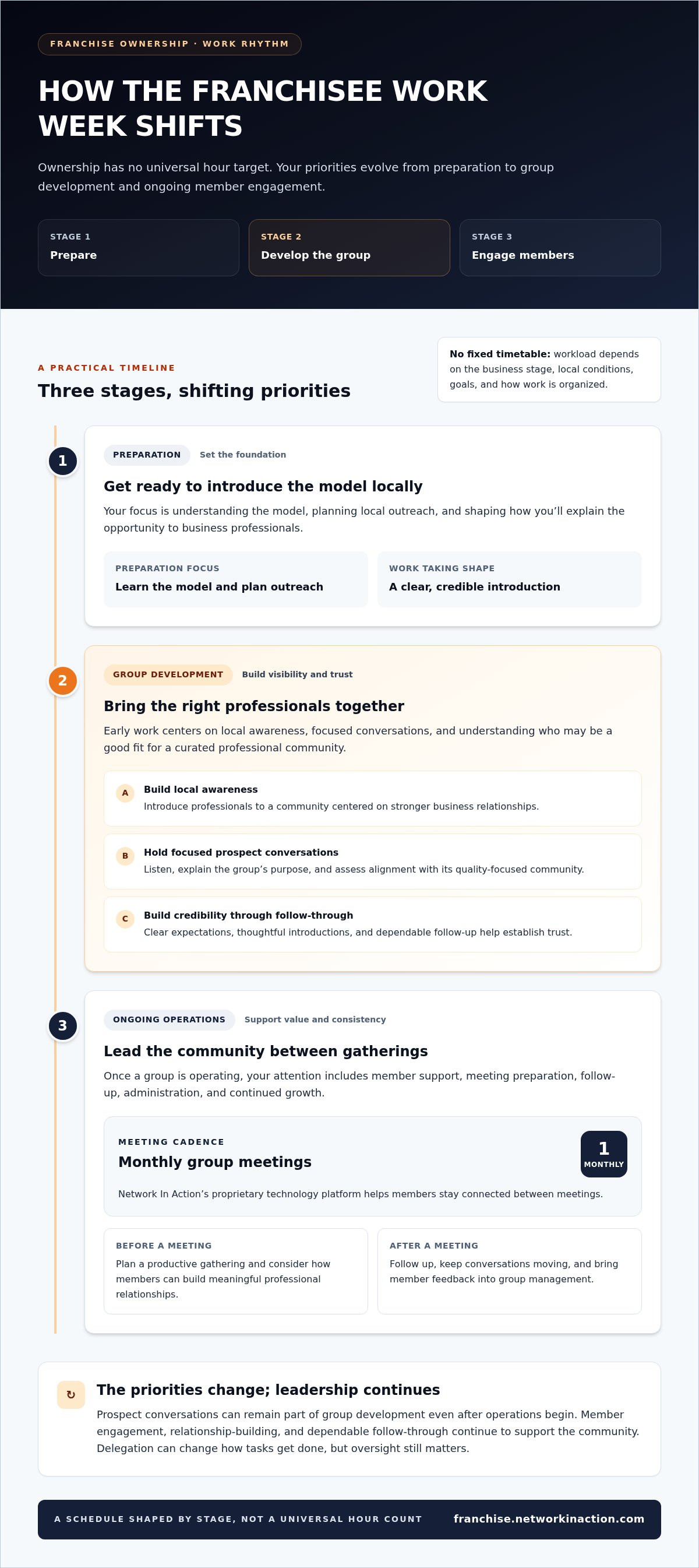
Your responsibilities evolve as a local group takes shape. The work moves through preparation, group development, and ongoing member engagement, without a fixed timetable or guaranteed milestone. Understanding these stages helps answer what is a realistic franchisee work week: it’s not one unchanging routine, but a set of priorities that shifts as the business develops.
- Preparation: Learn the model, plan local outreach, and shape how you’ll introduce the opportunity to business professionals.
- Group development: Build awareness, hold focused prospect conversations, and bring together a community centered on quality relationships.
- Ongoing operations: Prepare for monthly meetings, support members, follow up, and keep strengthening the group experience.
What demands attention while building a local group?
Early work centers on visibility and trust. You introduce local professionals to a business community built around stronger connections, then listen to understand who may be a good fit. Focused conversations help prospective members understand the group’s purpose and help you build a curated, high-quality community. This calls for leadership, not just promotion. Credibility grows through clear expectations, thoughtful introductions, and consistent follow-through.
Relationship-building doesn’t end when a group begins operating. Local awareness and conversations with prospective members remain part of developing the community. The emphasis may change, but steady engagement helps sustain group quality and support future growth.
What becomes recurring once a group is operating?
With an active group, the rhythm shifts toward member value and consistency. Before a monthly meeting, focus on planning a productive gathering and considering how members can develop meaningful professional relationships. Afterward, follow up to keep conversations moving and make member feedback part of ongoing group management.
Connection continues between in-person meetings. Network In Action’s proprietary technology platform helps members stay connected, while you lead the community and support its experience. Retention, referrals, group quality, and consistent communication all need attention. They aren’t automatic outcomes. Strong operations come from noticing what members need and following through.
There’s no single transition point when launch work disappears. A developing group may still need prospect conversations, while an established group still benefits from new relationships and active leadership. The balance depends on local conditions and your goals. For a closer look at the opportunity and its operating model, explore the franchise information kit.
Does a Franchisee Work Week Have to Follow Traditional Networking’s Weekly Rhythm?
No. Franchise ownership doesn’t come with one universal meeting schedule. Traditional networking models built around weekly gatherings can make meetings a fixed, time-consuming calendar commitment. That rigid cadence may leave less room for other priorities, particularly when gatherings feel transactional rather than focused on meaningful relationships. Network In Action groups meet monthly, creating a different operating rhythm without removing the work of leading a community.
For anyone asking what is a realistic franchisee work week, distinguish meeting frequency from ongoing responsibility. Fewer formal gatherings can give you more flexibility in how you organize the week. Outreach, member support, and follow-up still matter between meetings.
Meeting cadence: Traditional networking may center on weekly gatherings, creating a recurring calendar commitment. Network In Action groups meet monthly.
Between-meeting engagement: Relationships need attention between formal meetings. Network In Action’s proprietary platform helps members stay connected during that time.
Franchisee responsibilities: You lead the community, prepare for gatherings, support member engagement, and follow up. The cadence differs, but leadership remains essential.
How does a monthly meeting cadence affect the week?
A monthly gathering creates a preparation and follow-up cycle without making a weekly meeting the anchor of every week. Before each gathering, plan a useful member experience. Afterward, follow up to carry conversations forward. The rhythm may be less rigid than a weekly meeting model, but relationships continue throughout the month, not just on meeting day.
What role does technology play between meetings?
A platform can support communication and connection between in-person gatherings, helping members stay engaged beyond the scheduled meeting. It doesn’t replace your role. Technology supports the process; community leadership gives it direction. You still need to encourage meaningful participation, nurture professional relationships, and pay attention to group quality.
This approach offers an alternative to traditional networking structures that can be time-consuming and overly focused on recurring attendance. It doesn’t promise a specific number of hours saved or an effortless workload. For more context on the model, explore the business networking franchise model.
How Can You Build a Sustainable Franchisee Work Week?
A sustainable schedule takes deliberate planning. Set priorities, protect time for essential responsibilities, and review what’s working. The aim isn’t to pack every hour. It’s to lead the community consistently while creating a business rhythm that supports your goals for flexibility and growth.
Use this planning sequence to turn broad responsibilities into a workable routine:
- Anchor fixed commitments. Put monthly meeting preparation and follow-up on your calendar first, along with other commitments that can’t shift.
- Block relationship work. Set recurring time for member conversations, prospective-member outreach, and follow-up. Focus on valuable professional relationships, not activity for its own sake.
- Protect service and operations time. Schedule member support, group planning, and administration so essential work doesn’t get displaced by the next urgent task.
- Review and adjust. Look at which activities are strengthening the group and creating meaningful connections. Refine your priorities as the business and your goals evolve.
How should you organize recurring franchise responsibilities?
Start with the monthly meeting cycle, then build a repeatable week around it. For example, reserve separate blocks for meeting preparation, member service, outreach, and administrative tasks rather than switching between them all day. Leave room for follow-up as conversations develop. A calendar should provide structure, not force every week into an identical pattern.
Review whether your effort is supporting group quality. If outreach fills your schedule but leaves little time for member engagement, rebalance the work. Consistent follow-through matters, and so do the quality of relationships and the member experience.
How can you assess whether the workload fits your life?
Compare the responsibilities with your existing work, family, and personal commitments. Consider where your leadership is most valuable, such as building trust, shaping the group experience, and developing relationships. Then identify administrative tasks that can be handled through repeatable processes or supported systems. Systematizing work can create more structure, but it doesn’t remove the need for oversight.
Ask yourself: can you protect recurring time for community leadership without sacrificing the priorities that make ownership worthwhile? That’s a more useful test than expecting a guaranteed hour count. For a broader perspective on ownership fit, explore the executive business opportunities guide.
A realistic plan balances boundaries with responsibility. If Network In Action’s relationship-led work and monthly meeting cadence align with your goals, explore the franchise opportunity.
Could a Network In Action Franchise Fit Your Ideal Work Week?
A Network In Action franchise may fit your goals if you enjoy building professional relationships, leading a local community, and following through consistently. The work is more than showing up for a meeting. You guide a business referral group, support its member experience, and help relationships develop over time.
The model combines monthly meetings, a proprietary technology platform that supports member connection between gatherings, and an approach with no forced referrals. That structure can give you flexibility in how you organize recurring responsibilities, but it doesn’t remove the need for leadership, outreach, and member support. A realistic fit depends on whether those responsibilities work alongside your existing commitments and ambitions.
What strengths suit a relationship-led franchise?
Credibility, clear communication, and local leadership all help when you bring professionals together. A preference for quality relationships over a high volume of shallow connections is valuable, too. Rather than relying only on cold prospecting, you can build trust through focused conversations and consistent engagement. Your role is to create a professional community where members can develop connections, not simply facilitate attendance.
What should you explore before deciding?
Look closely at the operating model, franchisee training and support, and the technology-enabled approach to keeping members connected. Consider how monthly meetings, ongoing relationship-building, and group leadership would fit into your preferred schedule. Flexibility is a design consideration, not a promise of effortless ownership, set hours, or guaranteed results.
For a closer look at the opportunity, review the Network In Action franchise kit. You can also explore available franchise territories as a practical step in evaluating fit.
The key question isn’t whether every week will look the same. It’s whether you want to lead a relationship-driven business with consistent responsibilities and a monthly gathering rhythm. Explore the model at your own pace, then decide whether its approach to community leadership fits the work week and impact you want to build.
Build a Work Week Around the Business You Want to Lead
So, what is a realistic franchisee work week? It depends on the business stage, your goals, and the time you devote to building relationships and leading a local professional community. Launch work can focus on awareness and group development; ongoing operations shift toward member engagement, group quality, and steady follow-through.
Network In Action’s monthly group meetings create a different rhythm from models built around weekly gatherings. A proprietary platform supports member connection between meetings, while franchisee training and support help you build and manage local groups. That structure can offer flexibility, but it still calls for consistent leadership and attention.
If relationship-led growth and community leadership fit your ambitions, explore the Network In Action franchise opportunity at franchise.networkinaction.com. Consider whether its operating rhythm aligns with your professional and lifestyle goals. A clear-eyed look at the responsibilities can help you decide whether to move forward.
Frequently Asked Questions
How many hours does a franchisee work in a typical week?
There’s no standard hour count that applies to every franchise. What is a realistic franchisee work week depends on the business model, launch stage, growth goals, and how you organize responsibilities. Early group development can require a different focus from ongoing operations. Rather than relying on a general estimate, map recurring tasks, such as outreach, member support, planning, and administration, against your priorities.
What does a franchisee do during a normal work week?
A franchisee handles the work required to build and operate the business, not just its visible, customer-facing activity. For a Network In Action franchisee, that can include conversations with prospective and current members, relationship follow-up, local group planning, meeting preparation, and administration. The role also involves paying attention to member experience and group quality. The balance among these responsibilities shifts as the local group develops.
Can you own a franchise while keeping another job?
It depends on the franchise’s operating expectations and the time you can consistently commit. Ownership involves recurring responsibilities, and a business in its launch or group-building stage may require focused attention. Before taking on another job alongside a franchise, map the work, including outreach, meetings, follow-up, and member support, against your current schedule. Don’t assume that a monthly meeting cadence means the business can run without regular involvement.
Is franchise ownership flexible enough to fit around family commitments?
Some franchise models offer more control over how you organize work, but flexibility doesn’t mean responsibilities disappear. Consider when you’ll handle recurring tasks, how meeting preparation fits your calendar, and whether you can reliably make time for member conversations and follow-up. Network In Action’s monthly meeting cadence provides a different structure from weekly gatherings, while ongoing community leadership remains part of the role.
What does a Network In Action franchisee do between monthly meetings?
Between meetings, you continue leading the local professional community. Responsibilities may include connecting with members, following up on conversations, engaging prospective members, planning for the next gathering, and managing group operations. Network In Action’s proprietary technology platform helps members stay connected between in-person meetings. The platform supports engagement, while you provide the leadership and personal follow-through that help relationships develop.
Does a franchisee work more during the launch stage?
The launch stage can call for greater focus on building local awareness, speaking with prospective members, and establishing the group’s credibility. As operations develop, attention can shift toward meeting preparation, member experience, retention, and continued growth. The transition isn’t identical for every franchisee, and no specific hour total applies across the board. Planning around stages can help you anticipate how priorities may change.
Can technology reduce the time needed to manage a franchise group?
Technology can support communication and help members stay connected between gatherings, making it a useful part of group operations. It doesn’t replace your role in leading the community, supporting members, following up, or maintaining group quality. Network In Action provides a proprietary platform for member connection, alongside training and ongoing support for franchisees building and managing local groups. The platform supports the work, but doesn’t promise a specific time saving.