Your stagnant 401k isn't a safety net; it's actually the most underutilized capital asset in your portfolio. While legacy advice suggests letting it sit in volatile markets, high-level executives are realizing that this capital is the engine for their professional liberation. You've spent decades accumulating wealth that feels locked away, while the daily corporate grind continues to drain your energy. It's frustrating to watch your professional capital sit idle when you're ready to lead.
Learning how to use your 401k to buy a franchise is the strategic pivot that transforms your retirement funds into an active, high-yield asset. This guide reveals how to achieve debt-free business ownership by leveraging the Rollover for Business Startups (ROBS) structure. You'll understand the 2026 tax implications for high-earners under the SECURE 2.0 Act and see how to deploy your capital into a model that prioritizes recurring revenue and lifestyle autonomy. This blueprint details the path to exiting the corporate world and becoming a visionary leader in your professional community.
Key Takeaways
- Master the mechanics of how to use your 401k to buy a franchise through the ROBS strategy, enabling debt-free ownership without early withdrawal penalties or interest-bearing loans.
- Recognize the "Executive Plateau" and understand why owning a high-yield networking asset provides more financial security than today's volatile C-suite environment.
- Shift from low-yield, transactional interactions to a relationship-based growth model that leverages existing professional capital for scalable recurring revenue.
- Evaluate the technological advantages of modern networking systems over legacy networking organizations that rely on inefficient, manual processes and forced referrals.
- Follow a structured 90-day transition roadmap to move from corporate leadership to strategic ownership, focusing on time freedom and elite community influence.
Navigating the Executive Plateau: Why Senior Leaders Pivot to Ownership in 2026
The Executive Plateau is a quiet crisis. You've climbed the ladder. The view is stagnant. Your compensation has peaked, but your professional risk has increased. You've spent years refining your ability to lead, but you're still working for someone else's cap table. In the 2026 economic environment, C-suite roles are more volatile than ever. High-level leaders are realizing that the true ROI on their talent isn't found in a bonus check. It's found in ownership.
Ownership is a strategic pivot. It's about moving from being an expense on a balance sheet to owning the balance sheet itself. Legacy building starts now. Your core executive skills, specifically strategic planning and high-level networking, are the perfect foundation for elite business ownership. This isn't a simple career change. It's an upgrade to your lifestyle and your net worth. You're trading high-value hours for a paycheck that doesn't build equity. Ownership provides the structural resilience you need to thrive regardless of corporate shifts.
The Corporate ROI Problem
High-level executives often get trapped by "Golden Handcuffs." These high salaries and benefits keep you tethered to a role while your personal ROI drops. You deliver massive value to shareholders. You don't own the infrastructure. In a tech-forward market, corporate loyalty is dead. Organizations prioritize agility over your tenure. This drives leaders toward owner-operator models where they can apply their strategy and networking to an asset they control. They want to build equity in their own name rather than padding a corporate treasury.
Identifying the Ownership Trigger
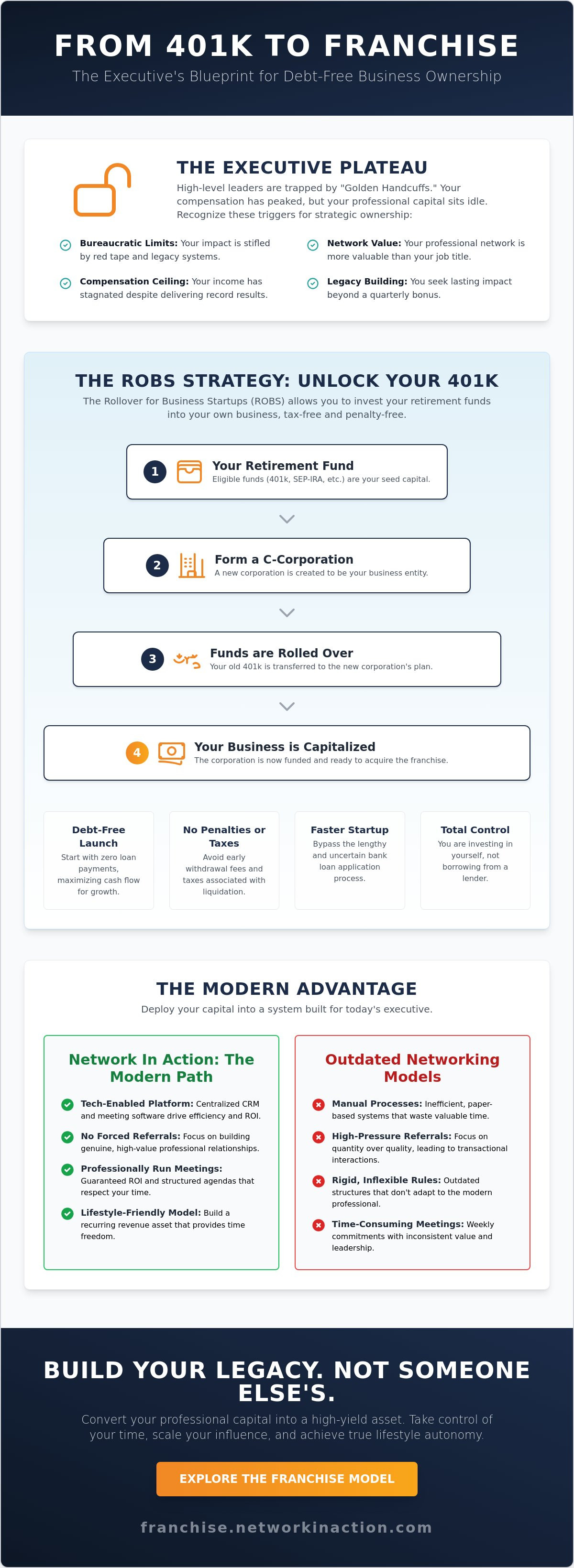
Recognize the signs. You've outgrown the C-suite when you see these five indicators:
- Your impact is limited by bureaucratic red tape and legacy systems.
- Your professional network is more valuable than your current job title.
- You've reached a compensation ceiling despite delivering record results.
- You're seeking a lasting legacy, not just a quarterly bonus.
- You want to control your time and scale your influence.
Waiting for retirement is a strategic mistake. It wastes your peak earning and networking years. Savvy leaders research What is a ROBS strategy? to fund their exit. Understanding how to use your 401k to buy a franchise allows you to deploy capital into a scalable asset now. This isn't a job search. It's an acquisition. You're securing a system that generates recurring revenue through community leadership. To see if your executive background fits this model, download our franchise kit and begin your professional capital audit. It's the modern evolution of professional growth. If you are ready to stop building someone else's dream, learning how to use your 401k to buy a franchise is the first step toward true autonomy.
How to Use Your 401k to Buy a Franchise: The ROBS Strategy for Executives
High-level professionals don't just work for capital. They deploy it. The Rollover for Business Startups (ROBS) is the most efficient way to fund a high-margin business without the friction of debt. While most people assume starting a business requires a massive SBA loan, senior executives understand the power of equity. By using a ROBS strategy, you aren't borrowing money. You're investing your own retirement capital into your own corporation. This creates a debt-free launch that preserves your cash flow for growth rather than interest payments.
The structure requires the formation of a C-Corporation. This legal entity establishes its own retirement plan, which then purchases stock in the company. This isn't limited to standard 401k accounts. You can also leverage 403(b), SEP-IRA, and Keogh plans to fuel your acquisition. The primary goal is achieving total lifestyle autonomy. Debt kills momentum. Starting without a monthly loan obligation allows you to focus on scaling your networking asset and building recurring revenue from day one. To see how this capital deployment fits into a modern business model, access the executive franchise kit for a deeper dive into ownership.
The Mechanics of a Debt-Free Launch
The process is a precise financial maneuver. First, you create a new C-Corp and a corresponding 401k plan. You then roll over funds from your legacy retirement account into this new plan. Finally, the new plan purchases shares of the corporation. This capital becomes the operating cash for your franchise. You've moved from a "borrower" mindset to an "investor" mindset. You own 100% of the equity. There are no credit checks. There are no collateral requirements. It's clean, efficient, and strategic.
Avoiding Common ROBS Pitfalls
Precision is mandatory. The IRS and Department of Labor have strict guidelines regarding IRS compliance for ROBS to prevent prohibited transactions. You can't use these funds for personal expenses or to pay yourself an unreasonable salary before the business is operational. Professional ROBS providers are essential for maintaining ERISA compliance and managing ongoing administrative filings. Failure to follow these protocols can trigger heavy taxes. For the tech-forward executive, staying compliant is simply a matter of using the right systems. You've navigated corporate compliance for years. This is no different. It's a standard operational hurdle on the path to how to use your 401k to buy a franchise successfully.
Beyond Legacy Systems: The Case for Modern Networking Infrastructure
Traditional networking is a relic. It relies on rigid, transactional models that prioritize quantity over quality. For a senior leader, time is the most valuable asset. Spending every Tuesday morning at a legacy networking organization trading low-quality leads isn't just inefficient; it's a drain on your professional credibility. Modern networking infrastructure is the disruptive solution. It replaces "forced referrals" with curated, relationship-based growth. By understanding using your 401(k) for business, you can pivot from the corporate grind into an asset that values your time and rewards your influence.
Monthly meetings are the new gold standard. Weekly models create the "burnout factor" that drives away top-tier talent. Elite professionals need a rhythm that fits a high-level schedule. This shift allows for deep, strategic connections rather than superficial check-ins. When you learn how to use your 401k to buy a franchise in this space, you're investing in an infrastructure built for the 2026 economy. You aren't just buying a business. You're owning a high-yield networking asset that runs on efficiency, results, and sophisticated technology. It is the next evolution of the industry.
The Flaws of Outdated Networking Models
Transactional environments are toxic to high-level growth. Outdated networking models often focus on rigid requirements and mandatory attendance that don't align with executive business logic. There is zero measurable ROI tracking in these groups. Busy executives need data, not just handshakes. Legacy systems lack the sophistication to attract the elite members who drive significant revenue. They trade in favors; modern systems trade in social capital and measurable financial returns.
Technology as the Executive Differentiator
Modern ownership requires modern tools. A sophisticated business referral platform enables group management that is both efficient and scalable. This digital ecosystem keeps your professional connections active 24/7 without requiring your constant physical presence. It creates the sleek, tech-forward image necessary to attract elite business owners who value their own time. Technology isn't just a feature. It's the core differentiator that makes this model a superior alternative to traditional methods. It allows you to lead your community with precision while maintaining the lifestyle autonomy you've earned. If you're ready to deploy your capital, learning how to use your 401k to buy a franchise lets you own the platform that others simply pay to join.
The 90-Day Transition: From Corporate Leader to Strategic Owner
Transitioning from the corporate grind to strategic ownership isn't a vague dream; it's a 90-day execution plan. You've spent years managing complex systems. Now, apply that discipline to your own asset. The path from executive to owner requires a shift in how you view your resources. You aren't just changing jobs. You're deploying capital to secure your future autonomy. This timeline is designed for speed, efficiency, and measurable results.
Step 1: Conduct a Professional Capital Audit. Identify the high-value nodes in your existing network. These are the senior leaders and business owners who trust your judgment. They are your first tier of influence. Step 2: Secure funding. This is the moment you execute on how to use your 401k to buy a franchise. By initiating a ROBS rollover, you transform dormant retirement funds into active, debt-free capital. Step 3: Market selection. Evaluate available territories to secure a high-potential market where your influence carries the most weight.
Step 4: Implement a referral marketing strategy. You aren't cold calling. You're inviting high-level peers into a superior ecosystem. Step 5: Launch with tech. Deploy a tech-backed infrastructure to ensure immediate professional credibility. You're launching a modernized business asset, not a manual hobby. If you're ready to see how your background aligns with this model, download our franchise kit to begin your 90-day sprint.
Financial and Operational De-risking
Senior leaders prioritize high-margin, low-overhead systems. Retail and food franchises carry massive overhead, inventory risks, and staffing headaches. A service-based networking franchise offers high-speed ROI because it lacks those legacy burdens. According to data from Guidant Financial, 81% of ROBS-funded businesses are still operational after four years. This success rate is driven by starting debt-free. You don't need a massive storefront. You need a platform that scales your influence. This model allows you to transition without the need for high-risk capital expenditures.
Leveraging Your Professional Capital
This is the ultimate mindset shift. Stop looking for a seat at someone else's table. Own the table. This is the "Authority Play." You become the local gatekeeper for business growth. You aren't asking for a job. You're offering a strategic solution that solves the inherent flaws of traditional networking. By converting your existing corporate contacts into high-value referral partners, you build a community that generates recurring revenue. You're no longer an employee; you're a visionary leader in your own professional community.
Network In Action: The Premier Path for High-Yield Executive Ownership
Network In Action (NIA) represents the next evolution of the networking industry. It's a sophisticated alternative to traditional networking that prioritizes efficiency and ROI. For the senior leader, this is the ultimate strategic move. You aren't just joining a group; you're owning the asset. By understanding how to use your 401k to buy a franchise, you can deploy your professional capital into a system that values quality over quantity. This model replaces the rigid, manual processes of the past with a tech-enabled platform built for the 2026 economy. It's a ready-to-use solution for executives who are ready to lead their own professional communities.
The NIA model is unapologetically results-oriented. It eliminates the friction found in legacy networking organizations, such as forced referral quotas and weekly time commitments. Instead, it offers a lifestyle-friendly approach centered on high-impact monthly meetings and continuous digital connectivity. This allows you to maintain professional sophistication while building a business empire across multiple territories. You've spent years managing corporate complexity. Now, align that experience with a proven system that scales your influence and your income simultaneously. It is the modern choice for modern leaders.
Freedom, Flexibility, and Scalability
True professional liberation means escaping the 9-to-5 grind without sacrificing financial growth. The NIA model provides a membership-based business structure that generates consistent recurring revenue. This isn't a high-pressure sales pitch; it's a strategic path to time freedom. You receive comprehensive support and training to master the NIA system, ensuring you can lead with confidence from day one. Because the overhead is low, you can focus on scalability. Owning multiple territories allows you to dominate your local market and build a legacy asset that grows in value every year. It's about building a business that serves your life, not the other way around.
Becoming the Local Authority
Leading an NIA group positions you as the ultimate connector for the elite business community. You aren't just a business owner; you're the gatekeeper for local growth. This role allows you to build a proprietary network of mid-sized business owners who rely on your platform for strategic connections. It's a position of significant social capital and professional credibility. You've already explored how to use your 401k to buy a franchise to gain debt-free ownership. Now, it's time to execute. To see the full blueprint of this modernized approach, download the free book and discover how to lead your own professional community with precision and impact.
Secure Your Professional Future
The Executive Plateau is a choice, not a destiny. You've seen how to leverage the ROBS strategy to fund your exit from the corporate grind without the burden of high-interest debt. By prioritizing a relationship-driven growth model over outdated networking models, you're building a high-yield asset that respects your time and scales your influence. The transition from corporate leader to strategic owner is a structured, 90-day execution plan that turns your existing professional capital into a legacy.
Mastering how to use your 401k to buy a franchise allows you to own the infrastructure of your local business community. Network In Action is disrupting a legacy industry with modern tech and a proprietary technology platform that supports over 150 global locations. It's time to trade the "Golden Handcuffs" for recurring revenue and lifestyle autonomy. Align your executive background with a system designed for high-margin efficiency and measurable results. You've spent decades building others' empires; it's time to build your own.
Download your executive franchise kit and explore available territories today. Your next evolution as a visionary leader starts with a single strategic decision. Take control of your impact and your future.
Frequently Asked Questions
Is using my 401k to buy a franchise riskier than staying in a senior executive role?
Business ownership offers more structural security than volatile C-suite roles in the 2026 economic environment. While corporate positions are subject to sudden shifts in leadership and strategy, owning an asset provides you with direct control over your financial destiny. You're moving from being a high-cost expense on a corporate balance sheet to owning the balance sheet itself. This shift builds long-term equity that a salary simply can't match.
How do I know if my executive skills will transfer to owning a networking franchise?
Your ability to lead professional communities and manage strategic relationships is the primary driver of success in this model. Senior leaders excel here because they already understand how to curate high-quality connections and drive results through influence rather than cold prospecting. If you've spent years managing teams, high-level projects, and corporate strategy, you possess the exact leadership traits required to grow a high-yield networking asset.
What are the specific IRS rules for using a ROBS rollover to fund a startup?
Understanding how to use your 401k to buy a franchise via the ROBS mechanism requires strict adherence to C-Corp regulations and ERISA compliance. The IRS mandates that you form a C-Corporation and establish a new retirement plan that purchases company stock. It's critical to avoid prohibited transactions, such as using funds for personal expenses or paying yourself an unreasonable salary before the business is operational. Professional providers are essential to ensure you meet all ongoing administrative requirements.
Can I use my 401k to fund a franchise while still working my corporate job?
You can initiate the funding process while employed, provided your current plan allows for in-service rollovers or you're utilizing funds from a previous employer's account. This allows you to secure your territory and begin the 90-day transition before fully exiting your corporate role. Learning how to use your 401k to buy a franchise while still employed provides a strategic buffer, allowing you to build momentum before your official launch.
How does modern networking technology differ from legacy networking organizations?
Modern systems utilize proprietary technology platforms to maintain 24/7 connectivity and track measurable ROI for every member. Traditional networking relies on manual, time-consuming processes and rigid, weekly meetings that often lead to executive burnout. Modern platforms automate group management and referral tracking, creating a sleek, efficient experience that attracts elite business owners. It's a technology-led solution that replaces the inefficient, transactional models of the past.
What is the average ROI for an executive-level service franchise in 2026?
Service-based franchises often achieve faster ROI because they lack the heavy overhead, inventory, and storefront costs associated with retail models. While specific returns depend on your execution and market, membership-based businesses provide the benefit of recurring revenue streams. Senior professionals should review the Financial Performance Representations in the Franchise Disclosure Document to assess potential returns. This model focuses on high-margin social capital rather than low-margin physical goods.
How much time does it take to manage a professional networking group effectively?
The modern networking model is designed for lifestyle autonomy, typically requiring only a few hours of active management per month per group. Because the system utilizes monthly meetings and automated technology, you avoid the daily grind of traditional business operations. This flexibility allows you to scale by owning multiple territories without being tethered to a 40-hour work week. It's a system built for efficiency, not just activity.
Why should an executive choose a franchise over starting a solo consulting practice?
A franchise provides a proven, scalable system and a tech-forward infrastructure that a solo consulting practice lacks. Solo consultants often find themselves trading time for money in a transactional cycle that's difficult to scale. Owning a networking franchise allows you to build a recurring revenue asset that works even when you aren't. You're owning the platform that others pay to access, rather than just selling your own hours.