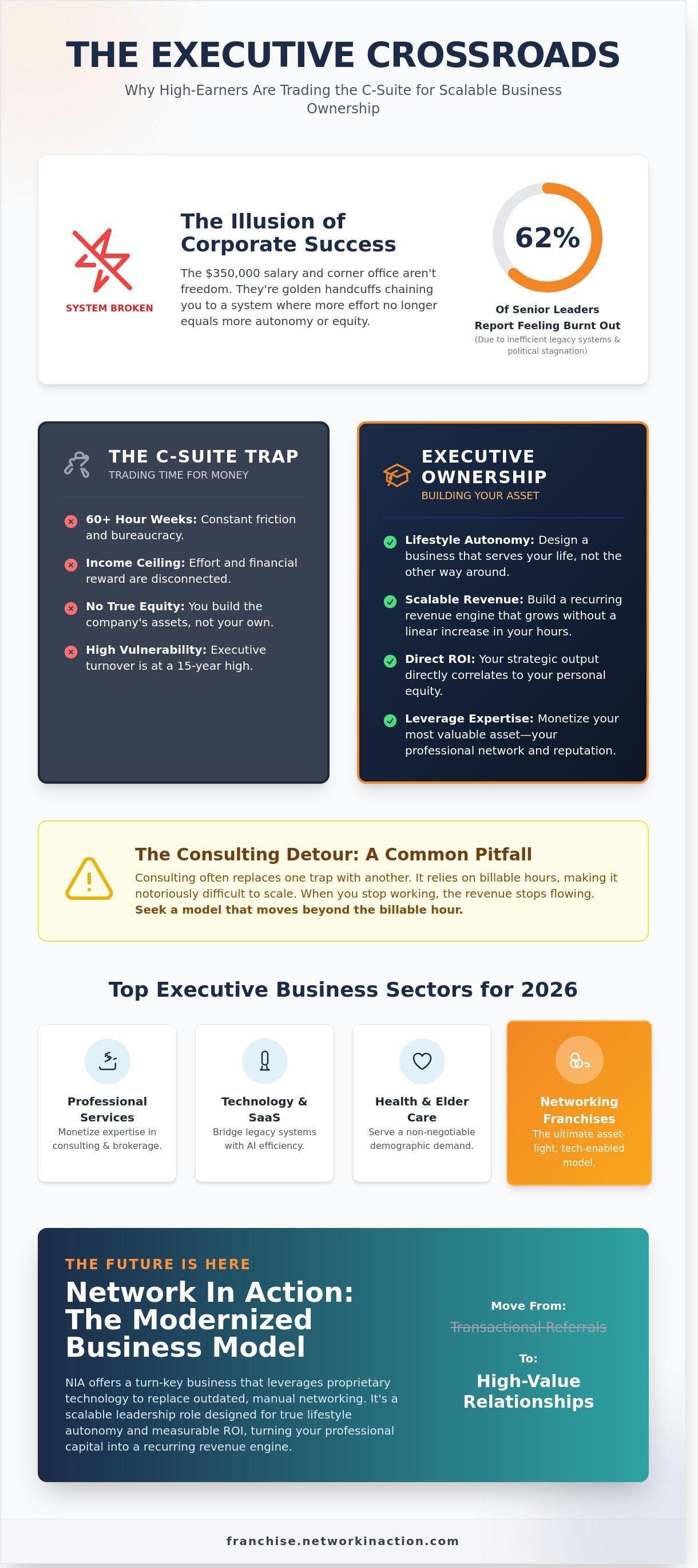
The $350,000 annual salary you earned last year isn't a badge of success. It's a set of golden handcuffs that trade your autonomy for 60 hour work weeks and endless corporate friction. You've hit the ceiling where more effort no longer equals more freedom, yet you still seek high-growth executive business opportunities that utilize your hard-won expertise. It's a common frustration for the 62% of senior leaders who report feeling burnt out by inefficient legacy systems and political stagnation. The status quo is failing you.
You understand that traditional networking is a broken, time-consuming relic that yields low returns for the effort invested. This guide reveals how to pivot from corporate employment to a turn-key business that leverages proprietary technology to build and lead a professional community. Networking evolved. You will discover a streamlined path to recurring revenue that replaces the clunky, manual processes of the past with a sophisticated, scalable leadership role designed for modern lifestyle autonomy and measurable ROI.
Key Takeaways
- Understand why traditional C-suite roles no longer guarantee security and how to pivot toward high-ROI executive business opportunities that prioritize scalability and professional freedom.
- Identify the most lucrative sectors for 2026, including tech-enabled professional services that turn your industry expertise into a recurring revenue engine.
- Evaluate the critical differences between outdated networking models and modern, tech-enabled systems that prioritize high-value relationships over forced, transactional referrals.
- Master a strategic roadmap for auditing your professional network and securing high-growth B2B territories to maximize your impact as a modern entrepreneur.
- Discover how proprietary technology replaces manual, old-school networking tasks to create a streamlined, lifestyle-friendly business model built for the visionary leader.
Beyond the Corner Office: The Shift Toward Executive Business Ownership
The 2026 executive landscape has fundamentally shifted. Traditional C-suite roles, once the pinnacle of professional achievement, no longer provide the security or autonomy they promised a decade ago. Data from 2025 indicated that executive turnover rates hit a 15-year high, proving that even those at the top are vulnerable to shifting corporate winds and aggressive restructuring. High-level professionals are now seeking executive business opportunities that prioritize equity over a salary, allowing them to reclaim their time while leveraging their hard-earned expertise.
Distinguishing between buying a job and investing in a scalable business is the first step toward true independence. Many former leaders fall into the trap of purchasing small operations that require their constant physical presence. A true executive opportunity involves a system that scales without a linear increase in your personal hours. It's about moving from being the technician to becoming the architect of a high-growth engine.
Your network and reputation are the most undervalued assets in your portfolio. While most professionals focus on liquid capital, your professional capital is what actually drives 2026 market value. The rise of the Community Architect marks the evolution of the modern leader. Instead of managing internal departments, these individuals build and lead elite professional ecosystems. Reframing your perspective on what is entrepreneurship allows you to see that your existing relationships are the primary fuel for a recurring revenue model.
The Limitations of Corporate Employment
Bureaucracy remains the primary killer of innovation and personal ROI. In large organizations, the link between your strategic effort and your financial reward is often severed by layers of administration and conflicting KPIs. The "Golden Handcuffs" trap keeps many talented leaders stationary, offering just enough compensation to discourage departure but not enough freedom to thrive. Breaking free doesn't mean sacrificing your lifestyle; it means moving to a model where you own the platform instead of just occupying a seat. Executives are pivoting to ownership in 2026 because they demand a direct correlation between their strategic output and their personal equity.
Why Consulting Isn't Always the Answer
Consulting often appears to be the logical next step, yet it frequently becomes another version of the "trading time for money" trap. Most independent consulting models are notoriously difficult to scale because they rely entirely on your billable hours. When you stop working, the revenue stops flowing. Scaling a solo practice typically requires adding massive overhead in the form of junior consultants, which complicates the business without necessarily increasing your personal take-home pay. You can explore a more efficient way to monetize your network and expertise by reading the NIA Free Book. It's time to move beyond the billable hour and toward a modernized, technology-enabled business model.
The Top Executive Business Sectors for 2026
Identifying the right executive business opportunities requires a shift from operational management to strategic ownership. In 2026, the most lucrative sectors prioritize intellectual capital over physical assets. High-level professionals are moving away from the grind of the C-suite to command businesses that offer both high margins and lifestyle autonomy. According to research on 2026 business trends, leaders must now master conflict resolution and AI integration to stay competitive in a rapidly shifting global market.
- Professional Services: High-level consulting and business brokerage remain dominant. These models allow you to monetize decades of industry expertise without the overhead of a massive staff.
- Technology and SaaS: Focus on platforms that bridge the gap between legacy systems and AI efficiency. Investing in software that solves specific "last-mile" business pain points ensures high retention.
- Health Care and Elder Care: With roughly 10,000 Americans turning 65 every day, the demand for sophisticated care management is non-negotiable. This is a demographic reality, not a market fad.
- Networking and Referral Franchises: This is the ultimate asset-light model. It removes the burden of inventory and physical storefronts while positioning the owner at the center of all local economic activity.
Evaluating Business Models for Scalability
An executive-level business differs from a standard small business through its reliance on systems rather than the owner's manual labor. If the business stops when you go on vacation, it's a job, not an enterprise. Successful executive models in 2026 focus on recurring revenue streams and zero-inventory requirements. You should target service-based businesses that maintain 20% to 40% net profit margins. These high-margin environments allow for rapid scaling in a digital-first economy where speed to market is the primary differentiator.
The Modern Networking Advantage
Owning a professional network is a recession-resistant strategy because it thrives on the needs of other businesses to grow. When you position yourself as the nexus of your local business community, you aren't just selling a service; you're controlling the flow of information and opportunity. Networking acts as the connective tissue for all other industries by facilitating the flow of capital, talent, and innovation across siloed sectors. Unlike legacy networking organizations that rely on rigid, time-consuming rules, modern models prioritize ROI and proprietary technology to drive results. You can explore available territories to see where this disruptive approach is making an impact. This isn't about collecting business cards; it's about building a high-efficiency engine for professional growth.
Legacy Networking vs. Modern Systems: A Strategic Analysis
Traditional networking is a broken relic of the 1980s. Legacy networking organizations still rely on rigid, transactional structures that prioritize attendance over actual revenue. High-level professionals don't have 50 hours a year to waste on breakfast meetings that offer zero substance. They demand efficiency. They demand results. This shift in expectations has opened a massive gap in the market, creating executive business opportunities for those ready to lead a more sophisticated model.
The Failure of Traditional Networking Models
Legacy systems fail because they treat seasoned entrepreneurs like hourly employees. The leading brand in the industry often forces members to meet weekly, regardless of whether there is actual business to discuss. This "forced referral" myth is a cancer to relationship quality. A 2023 industry survey revealed that 82% of high-level executives find mandatory referral quotas disingenuous and counterproductive. When you force a referral, you aren't building a bridge; you're just checking a box to avoid a penalty.
- Time Inefficiency: Weekly meetings consume over 100 hours of professional time annually when travel is included.
- Transactional Burnout: Rigid rules prioritize "passing paper" over deep strategic alignment.
- Poor Time-ROI: Elite business owners avoid these groups because the caliber of membership is often too low for high-stakes deal-making.
The Tech-Forward Disruption
Networking evolved. Modern systems replace outdated manual tracking with proprietary technology that maintains connectivity 24/7. This tech-first approach allows for a monthly meeting cadence without losing an ounce of referral momentum. A 2024 analysis of NIA’s internal data showed that monthly high-impact meetings increased member retention by 40% compared to weekly legacy models. The focus shifts from "socializing" to "strategic deal-making."
Modern platforms act as a digital nervous system for the group. They track ROI in real-time, ensuring every member knows exactly what their membership is worth in dollars and cents. This transparency attracts a higher caliber of decision-maker. You aren't just joining a club; you're leveraging a sophisticated business tool. If you're looking for executive business opportunities that offer recurring revenue and lifestyle autonomy, you can download a franchise kit to see how this disruption works.
Proprietary technology isn't just a feature; it's the foundation. It removes the administrative burden from the leader and puts the power of the network into the members' hands. This is the future of professional connection. It's streamlined, it's measurable, and it's unapologetically results-oriented.
The Executive-to-Entrepreneur Transition Roadmap
Transitioning from the C-Suite to business ownership isn't just a career change; it's a structural pivot. Successful executives realize that their professional network is their most valuable asset. Auditing this network determines market viability before the first dollar is spent. You aren't just looking for contacts. You're identifying potential referral partners who value ROI over small talk. This audit ensures your venture into executive business opportunities rests on a foundation of existing social capital.
Securing funding is the next tactical move. The initial franchise license fee provides access to a turnkey system that replaces the trial-and-error of independent startups. This is an investment in proprietary technology and a proven revenue model. You're not buying a job; you're acquiring a scalable asset. Launching as a Visionary Architect means you build the framework, then let the system drive the results.
Territory Selection and Market Analysis
Identifying high-potential business hubs requires looking at B2B density and economic growth factors. In 2024, cities with a 15% or higher increase in professional services firms offer the best landscape for community building. Exclusive territories are non-negotiable. They protect your business investment by ensuring you own the market share in your region. You can explore available territories to pinpoint where your strategic influence will have the greatest impact.
Mastering the NIA Model
The shift from managing staff to leading a community of peers is profound. You're no longer overseeing tasks; you're facilitating high-level connections. The NIA model leverages intensive initial training to help you curate a group of 30 or more high-quality referral partners. This isn't the high-pressure environment of legacy networking organizations. It's a sophisticated, tech-enabled approach to growth.
- The 90-Day Launch: A structured timeline from licensing to your first ROI-driven meeting.
- Peer Leadership: Positioning yourself as the authority in a room of successful business owners.
- Technology Integration: Using proprietary tools to track referrals and measure member success.
Legacy networking organizations rely on outdated, manual processes that waste time. NIA disrupts this by focusing on efficiency and measurable outcomes. Your goal is to reach profitability quickly by following a roadmap designed for those who value their time. If you're ready to transition, download the franchise kit to see the full blueprint.
Network In Action: The Future of Executive Business Opportunities
Networking evolved. Network In Action (NIA) doesn't just participate in the industry; it disrupts it. While legacy networking organizations rely on rigid, 1980s-style structures, NIA provides a sophisticated alternative built for the 2026 economy. It's the premier choice for those seeking executive business opportunities that prioritize efficiency over activity. The model eliminates the "forced referral" system, which often results in low-quality leads and wasted time. Instead, NIA focuses on curated, high-level professional relationships that drive genuine ROI.
The core of this disruption is NIA's proprietary technology platform. This internal system replaces the manual, "old-school" tasks that plague traditional networking. There's no more paper-shuffling or manual tracking of connections. The technology handles the logistics, allowing the franchise owner to focus on high-value coaching and community leadership. The economics of the model are equally compelling:
- Low Overhead: No expensive real estate or large staff requirements.
- High Margins: A lean operating structure ensures more revenue stays in the business.
- Recurring Revenue: Membership-based models provide predictable, monthly cash flow.
For a high-level leader, NIA is the logical conclusion. It offers a path to impact and autonomy without the soul-crushing weight of corporate bureaucracy. It's a strategic move for those who've mastered the C-suite and now want to own the room.
A Lifestyle-Friendly Business Model
The transition from a 60-hour corporate week to business ownership shouldn't mean trading one grind for another. NIA replaces the weekly, early-morning meeting schedule of traditional models with a streamlined monthly format. Hosting 12 high-impact meetings a year instead of 52 creates a 76% reduction in time commitment while maintaining elite professional credibility. You're building a "Legacy" business that increases in value as the community grows, providing a sense of purpose that extends beyond a quarterly earnings report. It's about achieving true time freedom while remaining a central figure in your local business ecosystem.
Next Steps for High-Level Leaders
Evaluating executive business opportunities requires a critical look at how your professional background aligns with a specific model. Successful NIA owners typically possess strong communication skills, a deep local network, and a desire to lead. The discovery process isn't a high-pressure sales pitch; it's a strategic alignment of goals. You'll analyze the territory, review the tech stack, and determine if you're ready to lead the future of networking. To begin your evaluation, you can request your Franchise Kit today. Move from curiosity to ownership and start building a business that works for you.
Secure Your Stake in the New Economy
The transition from the corporate corner office to independent ownership represents the ultimate strategic pivot for 2026. Traditional networking models have failed to keep pace with the speed of global commerce, leaving a vacuum for sophisticated, tech-enabled solutions. By focusing on recurring revenue and high-value community leadership, you can bypass the inefficiencies of legacy organizations that prioritize attendance over results. The roadmap to 2026 is clear; success belongs to those who leverage modern systems to build scalable assets.
Network In Action has been redefining networking since 2015, replacing outdated manual processes with a streamlined, ROI-driven framework. With over 150 locations worldwide, this model provides the structure needed to dominate the landscape of executive business opportunities. You'll gain access to a proprietary technology platform designed to maximize efficiency while you build a lifestyle defined by autonomy and professional influence. Don't settle for the status quo when you can lead the evolution of the industry.
Start Your Journey: Download the Executive Franchise Kit
The future of professional connection is yours to build.
Frequently Asked Questions
What are the most profitable executive business opportunities in 2026?
The most profitable executive business opportunities in 2026 center on high-leverage models like fractional leadership and tech-enabled networking franchises. These sectors capitalize on the 35% increase in businesses seeking specialized external expertise rather than full-time hires. A technology-backed networking model allows you to scale influence without the overhead of a large firm. It transforms your existing rolodex into a sustainable asset that generates consistent monthly returns.
How does a networking franchise compare to traditional consulting?
A networking franchise provides a scalable platform compared to the hours-for-dollars trap of traditional consulting. While consultants often face a 40% fluctuation in monthly income due to project cycles, NIA owners build a predictable monthly revenue stream. You move from being a solo practitioner to a community architect. This model leverages proprietary technology to automate administrative tasks, letting you focus on high-level relationship management and growth.
What is the typical time commitment for an NIA franchise owner?
Managing a professional networking group typically requires a commitment of 10 to 15 hours per week per group. This streamlined schedule allows you to maintain other business interests or enjoy a semi-retired lifestyle while earning executive-level returns. The proprietary NIA technology handles approximately 80% of the administrative heavy lifting. You spend your time where it matters: facilitating connections and leading monthly meetings that drive real ROI for members.
Do I need prior experience in networking to own a professional group?
You don't need a background in professional networking to own a successful franchise; you need a track record of leadership and business acumen. NIA provides a 3-day intensive training program and ongoing support to master the system. Most successful owners come from C-suite roles or sales leadership where they've already spent 15+ years building professional relationships. The system is a turnkey solution designed for sophisticated professionals who understand how to command a room.
Why do modern networking models avoid the forced referral system?
Modern networking models avoid forced referral systems because they prioritize relationship quality over artificial metrics. Legacy networking organizations often require members to pass a set number of leads weekly, resulting in 70% of referrals being low-quality or irrelevant. NIA focuses on genuine connection and ROI. This approach ensures that every introduction is professional, timely, and likely to result in actual business growth rather than just checking a box.
How much recurring revenue can an executive-level franchise generate?
An executive-level franchise can generate significant recurring revenue through a membership-based model. With 30 to 40 members per group paying monthly or annual dues, a single owner can build a six-figure income stream with just a few groups. This model provides a 90% retention rate in well-managed groups. It offers the financial stability that traditional business ventures lack, creating a predictable asset that grows in value as your community expands.
What technology is required to run a professional networking business?
Running a modern networking business requires nothing more than a smartphone and the NIA proprietary technology platform. This internal software replaces the clunky, manual processes found in outdated networking models. It tracks referrals, manages member ROI, and facilitates communication across the group. You don't need an IT department or expensive hardware. The system is designed for efficiency, allowing you to manage your entire business from a laptop or mobile device.
How do I transition from a C-suite role to owning a franchise?
Transitioning from a C-suite role to franchise ownership is a strategic shift from managing corporate assets to owning your own professional ecosystem. You start by leveraging your existing professional network to seed your first group. Most executives complete the transition within 90 days of signing their franchise agreement. This path offers the autonomy of entrepreneurship without the risks of a startup. It's the ultimate executive business opportunity for those ready to lead on their own terms.